Compact Track Loader vs Skid Steer in 7 Numbers
Buy a skid steer if you work on hard, dry ground and want speed. Buy a compact track loader if you work in mud, sand or slopes and can carry the undercarriage. We inspect both for buyers, and the wear parts decide the real cost, not the sticker.
Follow Equipment Reporters in Google Search
- Deere's 333G tracked loader tips at 10,570 lb, the 332G skid steer at 7,200 lb
- Their rated capacities sit only 100 lb apart because of how each is rated
- The skid steer tops out at 12 mph, the track loader at 7.8 mph
- The track loader presses the ground at 5.0 psi on standard tracks
- Cat puts average rubber track life at 1,200 to 1,500 hours
Same Engine, Two Machines
Most comparisons pit a small skid steer against a big track loader. That tells you nothing. So use a matched pair.
John Deere builds the 332G skid steer and the 333G compact track loader on the same Yanmar 4TNV94FHT engine. Both make 96.6 net horsepower in their Final Tier 4 form. Take away the engine and the brand, and only the wheels or tracks are left to explain the gap (Deere G Series skid steer brochure, Deere 333G spec sheet).
| Number | 332G skid steer | 333G track loader |
|---|---|---|
| 1. Net engine power | 96.6 hp | 96.6 hp |
| 2. Operating weight | 10,000 lb | 12,100 lb |
| 3. Tipping load | 7,200 lb | 10,570 lb |
| 4. Rated operating capacity | 3,600 lb | 3,700 lb |
| 5. Top travel speed | 12 mph | 7.8 mph |
| 6. Ground pressure | Not listed for tires | 5.0 psi on 17.7 inch tracks |
| 7. Wear part life | Tires, about 600 to 1,200 hours | Tracks, about 1,200 to 1,500 hours |
Rows 1 to 6 come straight off the two Deere sheets. Row 7 comes from Bobcat and Caterpillar, cited below. The weight row alone matters for your trailer. The track loader carries 2,100 more pounds down the road.
Why the Rated Capacity Looks the Same
Look at rows 3 and 4 together. The track loader tips at 3,370 more pounds. Yet its rated capacity is only 100 pounds higher. That's not a typo.
The two machines are rated on different shares of their tipping load. Deere's skid steer is rated at half its tipping load. Its 3,600 pound rating is exactly 50 percent of 7,200. The 333G sheet rates the track loader at 35 percent of tipping load, which gives 3,700 pounds. The same sheet also prints what it would be at 50 percent. That number is 5,285 pounds.
So what does that mean for you?
- Don't shop by rated capacity across types. A track loader rated near a skid steer has far more weight holding the load down.
- Still run to the plate. The rating in the cab is the number the maker stands behind. Don't load past it because the tipping load is higher.
- Read both numbers on a listing. If a seller quotes only one, ask for the tipping load and which share the rating uses.
Where Each One Wins on the Ground
Ground decides most of this. Speed and pressure point opposite ways.
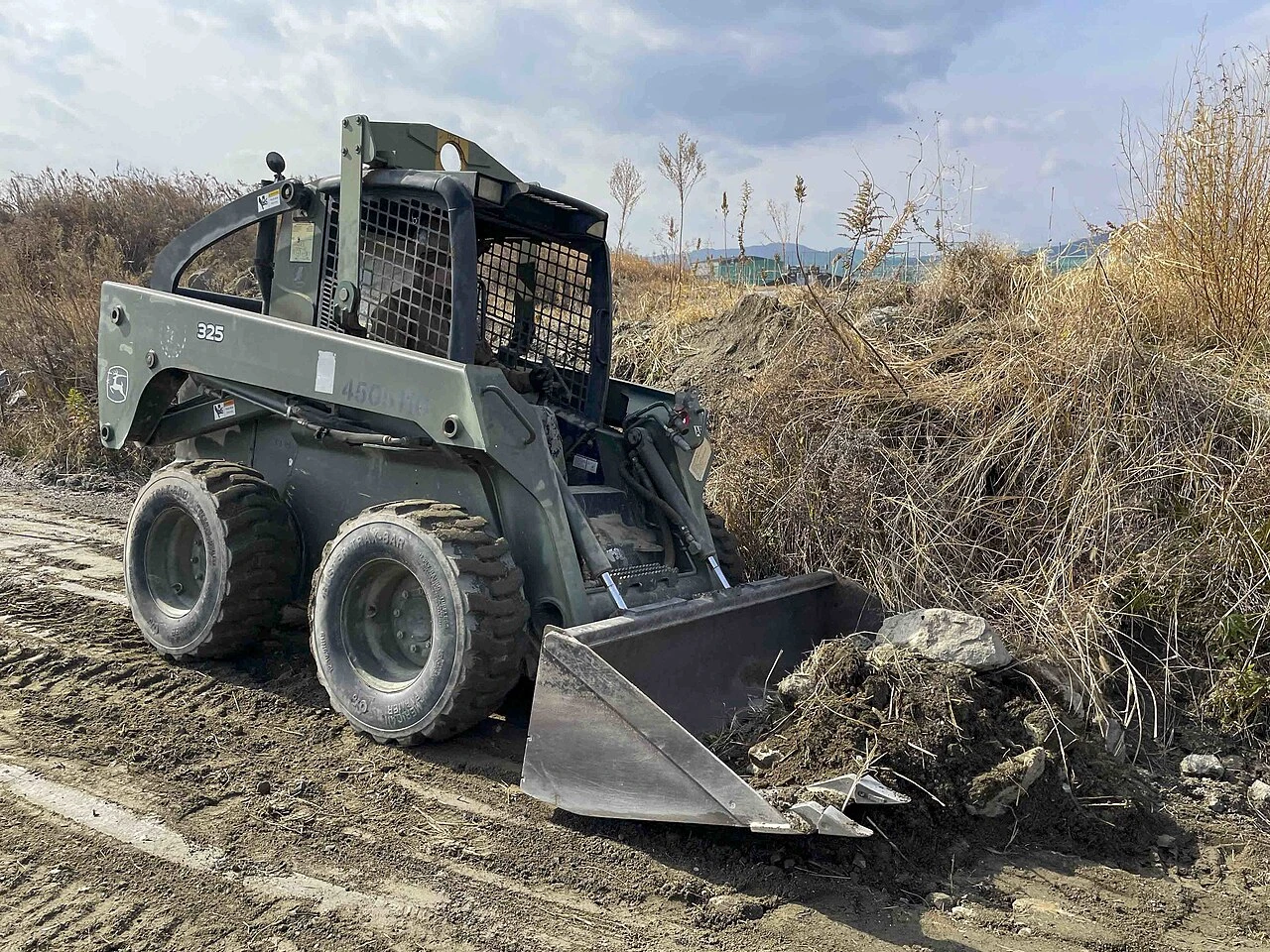

The skid steer wins on hard ground. The 332G runs up to 12 mph in high range. The 333G tops out at 7.8. On a big yard, a farm or a paved lot, that gap adds up every trip.
The track loader wins on soft ground. The 333G spreads its weight to 5.0 psi on standard 17.7 inch tracks. Deere lists 5.6 psi on the narrower 15.8 inch option. Low pressure keeps it on top of mud and sand where tires dig in.
Both wear fast when you drive them wrong. A Bobcat product specialist told For Construction Pros to make turns before you reach asphalt or concrete. Cat's track specialist says high speed, sharp turns, counter rotation and spinning in a pile all chew tracks faster. Same habits, same damage, different parts.
A track loader is also no stranger to concrete. Cat says bar tread tracks give a better ride on hard surfaces. But hard ground still costs track life, so plan for it.
The Wear Parts Set the Real Cost
The purchase price is one bill. The rubber under the machine is a bill that keeps coming.
Skid steer tires. In a For Construction Pros report from May 24, 2010, a Bobcat specialist gave this rule of thumb for tire life.
- Mixed dirt, roads and parking lots, about 600 to 800 hours.
- Mostly dirt, like landscape work, about 800 to 1,200 hours.
- A careful owner operator, up to about 1,400 hours.
- Severe demolition work, as little as 400 hours.
A Deere product manager in the same piece put tires at 15 to 20 percent of a skid steer's operating cost. Camso, a tire and track maker, says almost half of skid steer tires fail before the end of their useful life. Cuts, low pressure and spinning kill them early.
Track loader tracks. Cat says to expect an average of 1,200 to 1,500 hours from well kept rubber tracks. Cat's used equipment team gives a wider range, 400 to 2,000 hours. The job, the operator, the ground and the upkeep set where you land.
Tracks are only part of it. The 333G runs five rollers and two idlers per side, plus the drive sprockets. That's 14 rollers and idlers that wear, against four wheels on a skid steer. When a track set wears out, check those parts before you price new rubber.
What to Check on Each One Used
A used machine of either type hides its biggest bill underneath.
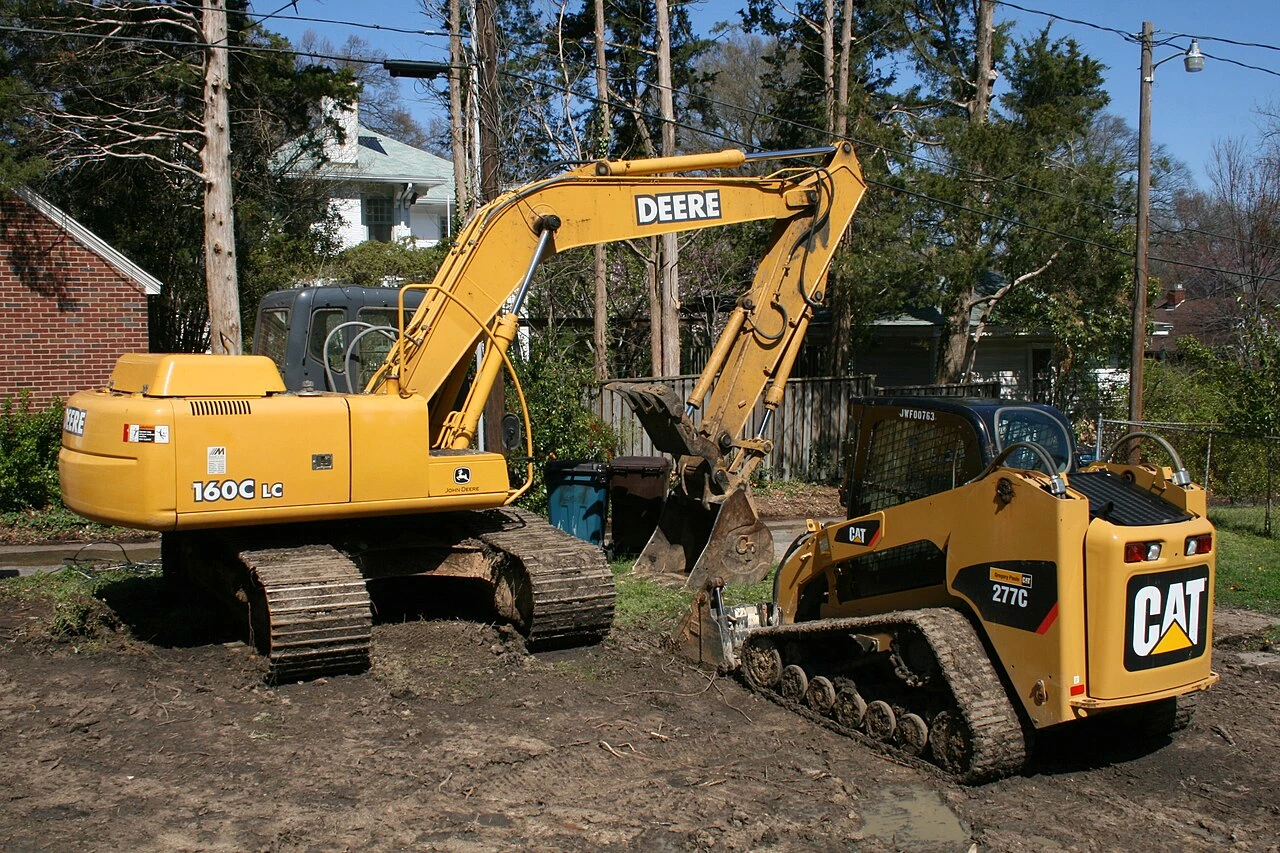

On a skid steer, look at the drive first.
- Pull the chaincase check and look at the oil.
- Drive straight and feel for pull to one side.
- Read the tire tread. Titan Tire says lugs wear shallow in the center first. Camso says never mix tire types on one machine.
- Ask if the tires are foam filled. Foam can weld to the rim and make the next swap costly.
On a track loader, look at the undercarriage first.
- Check the sprocket teeth. Cat Used says rounded teeth stop engaging the track.
- Look for cracks and steel cords showing through the rubber.
- Listen for clicking while it drives. Cat Used ties that to broken links.
- Divide the hours by about 1,200 to 1,500. That's roughly how many track sets it should have worn.
New tracks on a high hour machine aren't proof of care. Worn sprockets under new rubber eat it fast. Our used skid steer guide covers the drive and hydraulics in depth. The skid steer hours guide covers the track count math.
Pick by Your Ground, Not the Brochure
Match the machine to the ground it will see most days.
| Your work | Better pick | Why |
|---|---|---|
| Paved lots, concrete, barns | Skid steer | Faster, and tires are cheaper to replace |
| Long hauls across a big yard | Skid steer | 12 mph against 7.8 mph on Deere's pair |
| Mud, sand, soft fill | Track loader | 5.0 psi keeps it on top |
| Slopes and grading | Track loader | More weight and a longer footprint holding it down |
| Heavy buckets and pallets | Track loader | 10,570 lb tipping load against 7,200 lb |
| Small trailer and truck | Skid steer | 2,100 lb lighter on Deere's pair |
| Demolition and debris | Either, set up right | Tires can drop to about 400 hours, so plan on solid tires |
Split work? Pick the ground you see most. Then price the wear parts for the ground you see least.
Read These Too
Shopping a common model? Start with its guide.
- John Deere 333G track loader inspection guide
- Cat 259D track loader inspection guide
- Bobcat S650 skid steer inspection guide
- 9 checks to run before buying used heavy equipment
Want someone on site before you pay? We run a heavy equipment inspection on skid steers and track loaders, undercarriage included. We work for the buyer, never the seller.
Where the Facts Live
| What we cited | Where it came from |
|---|---|
| 333G Compact Track Loader spec sheet, DKAGCTL333 | John Deere, accessed November 2026 |
| 320G, 324G, 330G and 332G Skid Steers brochure, DKAGSSL | John Deere, accessed November 2026 |
| How to Choose the Right Track for Your Compact Track Loader | Caterpillar, accessed November 2026 |
| When to Replace Your Compact Track Loader's Rubber Tracks, March 12, 2024 | Cat Used, Caterpillar, accessed November 2026 |
| How to Maximize Skid Steer Tire Life, May 24, 2010 | For Construction Pros, accessed November 2026 |
| Minimizing Skid Steer Tire Wear and Premature Disposal, June 5, 2017 | Camso, accessed November 2026 |
FAQ
- Is a compact track loader better than a skid steer?
- Not across the board. A track loader is better in mud, sand and on slopes, and Deere's 333G tips at 10,570 lb against 7,200 lb for the 332G skid steer. A skid steer is faster, lighter and cheaper to keep in tires on hard ground.
- What is another name for a track loader?
- People call it a compact track loader, a CTL or a tracked skid steer. Most makers use compact track loader.
- Why does a track loader have about the same rated capacity as a skid steer?
- The track loader is rated on a smaller share of its tipping load. On Deere's pair, the skid steer is rated at 50 percent and the track loader at 35 percent, so 3,600 lb and 3,700 lb look close even though the tipping loads are far apart.
- How long do skid steer tires last?
- A Bobcat specialist put it at about 600 to 800 hours on mixed ground and 800 to 1,200 hours on mostly dirt. Severe demolition work can drop that to about 400 hours.
- How long do compact track loader tracks last?
- Caterpillar says to expect an average of 1,200 to 1,500 hours from well kept rubber tracks. Its used equipment team gives a wider range of 400 to 2,000 hours, set by the job, the operator, the ground and upkeep.
- Can you run a track loader on concrete?
- Yes, but it costs track life. Cat says bar tread tracks ride better on concrete and asphalt. Avoid sharp turns and spinning on hard ground, since those wear tracks fastest.
Buying something used? We work for the buyer, never the seller, and hand you a photo report with a plain verdict.
Pick your equipment type and request an inspection