Follow Equipment Reporters in Google Search
- Hours count time, not how hard the work was
- Bigger engines usually run longer before an overhaul
- Track loaders wear out a set of tracks every 1,200 to 1,500 hours on average
- Each hour band comes with its own questions
- Grease and records matter more than the number
Where the Range Sits
We look at a lot of used loaders, and the hour meter is the first thing every buyer asks about. It is also the number that fools people most often.
Equipment Trader's guide gives the range. An 80 horsepower skid steer can often pass 8,000 hours before an engine overhaul. A 40 horsepower machine may need one near 4,000 hours. Many operators expect about 5,000 hours before real mechanical trouble starts (Equipment Trader, May 8, 2023).
So yes, 5,000 hours on a small machine is a lot. The same reading on a large one may leave years of work. But engine life is only one piece. On a skid steer the drive, the chaincase, the pins and the tracks often wear out first. That is where the money goes.
Why the Hour Meter Lies by Leaving Things Out
An hour meter counts how long the engine ran. It says nothing about what the machine did in that time.
- Idle hours count the same as work hours. A loader that sat warm on a job site all winter piles up hours with very little wear.
- Hard work counts the same as easy work. One hour on a mulcher in rock is not one hour moving pallets on a farm.
- Care does not show on the meter. Bobcat's own manual for the S70 calls for grease on the lift arms, cylinders, Bob-Tach and pivot pins every 10 hours. It also warns that oil and filter life drops in heavy dust and extreme heat (Bobcat S70 Operation and Maintenance Manual, service schedule). A machine that got that care and one that never did can show the same hours.
That is why we never price a loader off the meter alone. The meter tells you where to look. The wear tells you what you are buying.
Turn Hours Into Hours per Year
Before you drive out to see a machine, do one quick sum. Divide the hours by the age in years.
Equipment Trader describes light use as 15 to 30 hours a week, and full time work as 6 to 8 hours a day, 5 to 7 days a week (Equipment Trader). Over a year, using 50 working weeks, it works out like this.
- Light use. 15 to 30 hours a week comes to about 750 to 1,500 hours a year.
- Full time. 6 hours a day, 5 days a week comes to about 1,500 hours a year. Push it to 8 hours a day, 7 days a week and it passes 2,800.
Now read the machine. A five year old loader with 1,000 hours averaged 200 a year. That is very light. It may be a great find, or it may have sat for long stretches with old fluids and dry seals. A five year old loader with 7,000 hours averaged 1,400 a year. That is a working machine, likely from a fleet. Neither number is good or bad on its own. Each one tells you which questions to ask.
Track Loaders Have a Second Clock
If the machine runs on rubber tracks, the hour meter also tells you how many sets of tracks it has worn out. Most hour guides skip it.
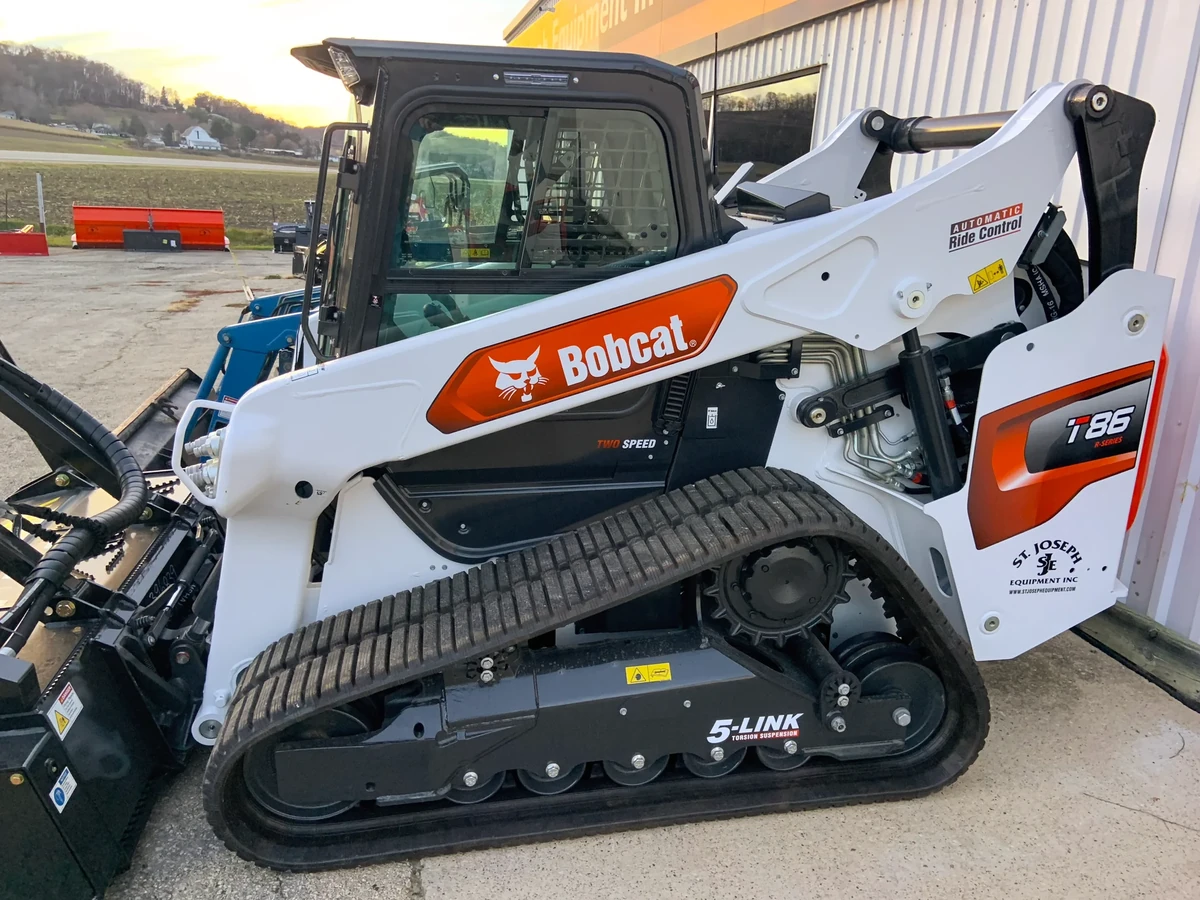

Caterpillar says to expect an average of 1,200 to 1,500 hours from a set of rubber tracks when they are well kept. It names four things that change that number. Those are the job, how the operator drives, the ground and the upkeep (Cat track selection guide). Cat's used equipment team gives a wider range of 400 to 2,000 hours (Cat Used, March 12, 2024).
The math at Cat's 1,200 to 1,500 hour average follows. It is a worked example, not a rule for any one machine.
Use this to test the seller's story. A track loader at 3,000 hours that still wears its first tracks is unusual at that average. Ask why. Maybe it ran on grass and snow. Maybe the meter was changed. Also ask when the rollers, idlers and sprockets were last done. Cat Used lists rounded sprocket teeth, cracks in the track, steel cords showing through and a clicking noise as signs a set is done.
New tracks on a high hour machine are not proof of care either. Sellers often put tracks on right before a sale. Look at the sprockets. Worn sprockets under new tracks will chew through them fast.
What to Ask at Each Hour Band
This is the checklist we work from. The bands are our own rule of thumb from inspecting loaders, not a maker's spec. Use them to plan the questions, then let the wear give the answer.
| Hours | What it usually means | What to ask or check |
|---|---|---|
| Under 1,000 | Light use or a long sit | Why so few hours? Fluid age, cracked hoses, dry seals. Does the wear match the meter? |
| 1,000 to 3,000 | Mid life for most machines | Grease records, first track change on a loader, drive pull and creep, hydraulic drift. |
| 3,000 to 5,000 | A working machine | Pin and bushing play, chaincase oil and chain slack, second or third track set, final drive noise. |
| Over 5,000 | High hours, priced for it | Engine blowby and cold start, pump speed under load, any rebuild receipts, cracks and welds on the arms. |
A machine over 5,000 hours with receipts for a rebuilt drive and new pins can be a better buy than a 2,000 hour loader that was never greased. The band sets the questions. The answers set the price.
Can You Trust the Reading?
Hour meters fail and get replaced. A replaced meter can start back near zero, and the bill of sale will not tell you.
- Check the computer. Most newer loaders store hours in the engine or machine controller. A scan tool reads them.
- Check telematics. Bobcat's Machine IQ logs engine hours, maintenance intervals and, on the paid tier, fault code history (Bobcat Machine IQ). Cat and Deere have their own systems. Ask the seller to show the history.
- Check the wear. Worn pedals, a torn seat, polished controls and loose pins on a low hour loader do not add up.
When the meter, the computer, the records and the wear all agree, you can trust the number. When one of them is off, slow down.
Where the Hours Show Up First
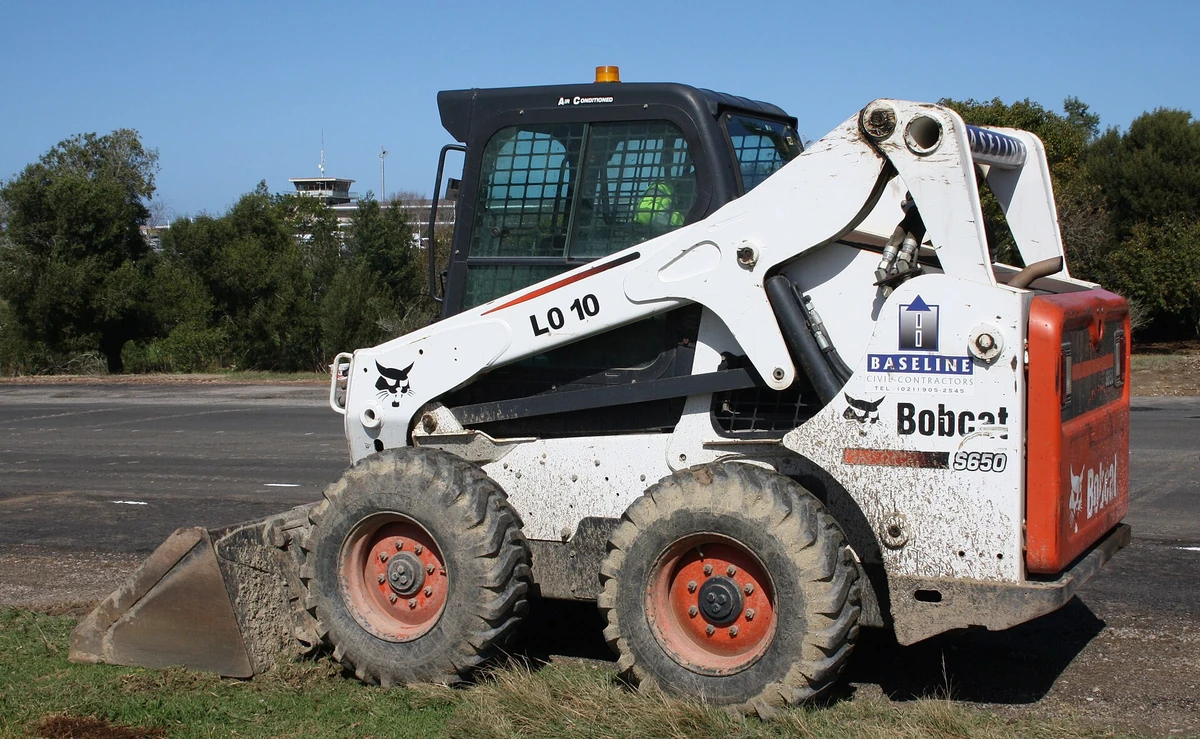
On a wheeled skid steer the costly parts are the drive motors and the chaincase. Drive straight on flat ground and watch for pull. Center the controls and watch for creep. Check the chaincase oil and rock the machine to feel for slack. Our Bobcat S650 guide walks through these on one of the most common rental machines.

On a track loader, the undercarriage and final drives lead the bill. Measure the tracks, rollers, idlers and sprockets, and listen to the finals while driving. The Cat 259D guide covers that machine.
On both types, test lift drift with a loaded bucket, run the auxiliary hydraulics with a real attachment, and check the seat bar lockout. Bobcat's manual says lift and tilt must not work with the seat bar raised. For the full walkaround, read what to look for when buying a used skid steer. For how the same idea works on bigger iron, see how many hours is a lot for an excavator.
If you want it measured for you, our heavy equipment inspection reads the hours from the meter and the controller, measures the wear, and hands you a photo report with a plain verdict.
Where the Facts Live
| What we cited | Where it came from |
|---|---|
| How to Choose the Right Track for Your Compact Track Loader | Caterpillar, accessed October 2026 |
| When to Replace Your Compact Track Loader's Rubber Tracks, March 12, 2024 | Cat Used, accessed October 2026 |
| S70 Operation and Maintenance Manual, service schedule | Bobcat, accessed October 2026 |
| Machine IQ telematics | Bobcat, accessed October 2026 |
| How Many Hours Is a Lot for a Skid Steer? May 8, 2023 | Equipment Trader, accessed October 2026 |
FAQ
- Is 3000 hours a lot on a skid steer?
- Not by itself. At 3,000 hours most skid steers are in mid life. A track loader has likely worn through two sets of tracks by then. Check pin play, the drive and the records, and ask when the tracks were last changed.
- Is 2000 hours a lot on a skid steer?
- No. 2,000 hours is moderate use for most loaders. What matters more is how those hours were spent and whether the machine was greased and serviced on time.
- Is 1000 hours on a skid steer a lot?
- No, it is low. On an older machine it can mean it sat for long periods, so check fluid age, hoses and seals, and make sure the wear matches the reading.
- How many hours is too high for a skid steer?
- There is no fixed cutoff. Many operators expect about 5,000 hours before major trouble, and larger engines can pass 8,000 before an overhaul. A high hour machine with good records can still be a fair buy at the right price.
- How many hours do skid steer tracks last?
- Caterpillar puts the average at 1,200 to 1,500 hours for well kept rubber tracks, with a wider range of 400 to 2,000 hours depending on the ground, the operator and the upkeep.
Buying something used? We work for the buyer, never the seller, and hand you a photo report with a plain verdict.
Pick your equipment type and request an inspection