Follow Equipment Reporters in Google Search
- Match the serial plate to the bill of sale
- Run a theft check before money changes hands
- Search liens under the seller's name
- In California, a Tier 3 engine can't join any fleet
- Run every function cold, hot and under load
Papers First, Then Steel
We look at used machines for buyers, not sellers. The worst buys we hear about rarely start with a bad engine. They start with a bad paper trail.
A tired pump is a repair bill. A stolen loader is a total loss. So is a machine the bank still owns. And in California, a cheap older engine can be one you can't legally put to work.
So the order matters. Checks 1 to 4 are about the papers and the rules. Checks 5 to 8 are about the steel. Check 9 is the math. Skip ahead to the machine if you like, but don't hand over money until the first four pass.
Check 1. Match the Serial Plate
Find the serial number plate on the machine. It's often called the PIN, for product identification number. Photograph it. Then match it, digit for digit, to the bill of sale, the loan payoff letter and the service records.
Most heavy equipment has no title. Construction Equipment Guide reported that only a couple of US states recognize titles for heavy equipment, so the bill of sale is the ownership document (Construction Equipment Guide, August 12, 2016). The same article says to ask for the seller's own bill of sale from when they bought it. It should show the date, make, model and serial number.
- Plate missing or loose. Walk away. A plate held on with new rivets or glue is a red flag.
- Fresh paint near the plate. Ask why. Paint is one way to hide a ground off number.
- No paper at all. A seller who can't show how they got it can't show it's theirs.
If the deal is a road machine, like a dump truck or a truck mounted crane, it usually has a VIN and a title. Check those the same way you would on a pickup.
Check 2. Run a Theft Check
Equipment theft is common, and stolen machines rarely come home. The National Equipment Register and the National Insurance Crime Bureau counted 11,493 equipment theft reports in 2015. Only 2,552 were recovered, or 22 percent (NER and NICB, 2015 Theft Report).
The same report lists a cause buyers can fix. Among the reasons so few machines are found, it names a lack of prepurchase screening of used equipment. It tells buyers to check a machine in the NER database before they buy.
Small, mobile machines are the ones that go missing. The report counted 1,482 stolen skid steers and 338 stolen backhoes in 2015. It put the average stolen machine at $26,765. It also named easy resale in the used market as one reason theft stays high.
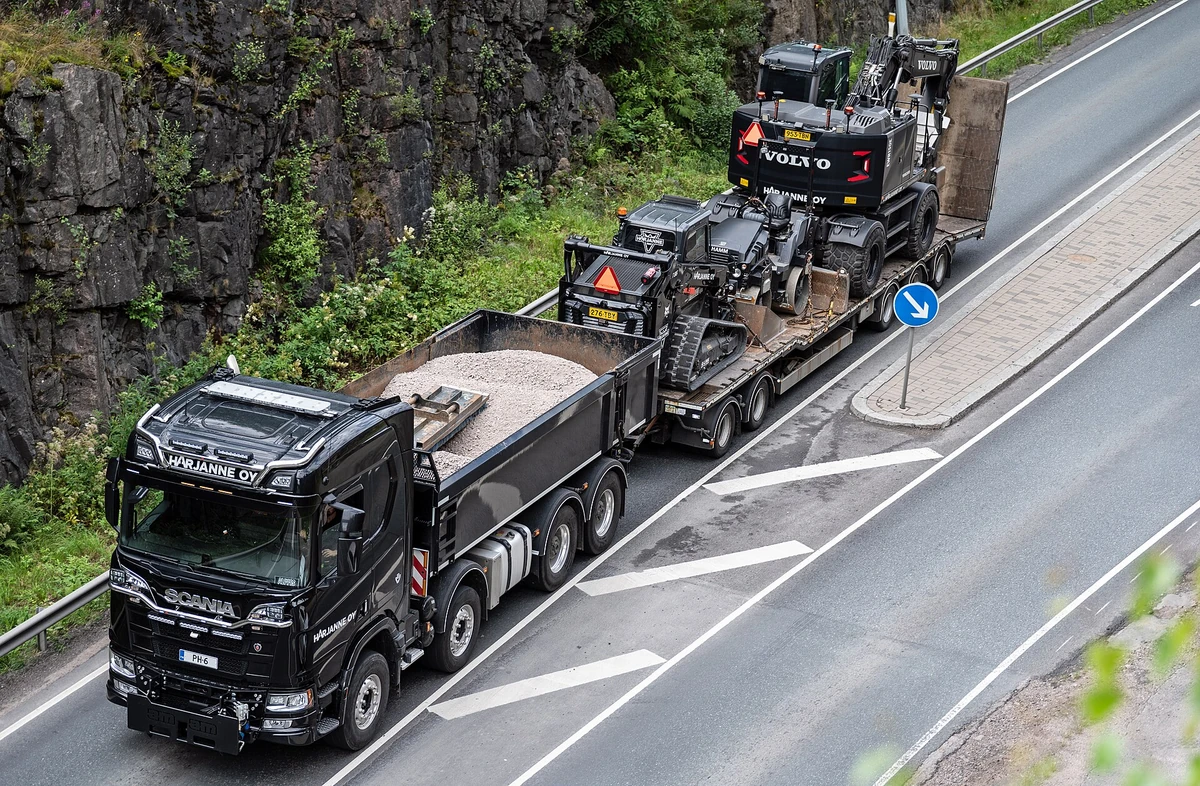

One case in that report started with a buyer. A man in Texas thought the Takeuchi TL230 skid loader he had bought might be stolen. He called the sheriff. It had been reported stolen in August. The seller was arrested for felony theft. The buyer was right to ask, but he asked after he paid.
Run the check before you pay. If the seller won't let you write down the serial number, you have your answer.
Check 3. Search for Liens
A lien means a lender has a claim on the machine. If the seller owes on it and stops paying, the lender may come after the machine, even after you own it.
Construction Equipment Guide put it plainly. A seller's letter saying the machine is free of liens is not a legal document. A lien search is the real test. It also warned that a buyer should be careful when a seller they don't know claims no debt at all.
Lenders record that claim by filing a UCC financing statement with the state. In California, the Secretary of State is the central filing office, and it says UCC filings are public records. Its online system offers a debtor search (California Secretary of State, UCC). Other states run their own.
- Search by name. UCC filings are indexed by the debtor, so search the seller's own name and any business name they use.
- Search every state. Search where the seller lives and where the business is based.
- Get a release. If a lien shows up, the lender's written release, or a payoff paid straight to the lender, settles it.
Check 4. Read the Engine Tier
This is the check most buyers outside California have never heard of. If the machine will ever work in California, the engine tier can decide whether you can use it.
CARB's off-road rule covers self-propelled off-road diesel vehicles of 25 horsepower or more used in California. That includes most loaders, dozers, excavators and backhoes. Since January 1, 2024, no fleet may add a Tier 3 engine. Large and medium fleets may add only Tier 4 Final or cleaner (CARB, In-Use Off-Road Diesel-Fueled Fleets Regulation Overview, January 2024).
Fleet size is the total horsepower you own. Ultra-small is under 500 hp. Small is up to 2,500. Medium is 2,501 to 5,000. Large is over 5,000. Small fleets can still add Tier 4 Interim engines until 2028, and ultra-small fleets until 2035.
Older tiers also have to stop running. The 2022 changes phase out Tier 0, 1 and 2 engines between 2024 and 2036. The bigger the fleet, the sooner.
| Fleet size | Tier 0 stops | Tier 1 stops | Tier 2 stops |
|---|---|---|---|
| Large | 2024 | 2026 | 2028 |
| Medium | 2026 | 2028 | 2030 |
| Small | 2028 | 2030 | 2032 |
| Ultra-small option | 2028 | 2030 | 2036 |
There are exits. Personal use machines, machines used only for farming and machines awaiting sale are exempt. A low-use machine, under 200 hours a year on a meter that can't be reset, must still be reported and labeled. It is exempt from the main performance limits.
The seller has duties too. CARB's sales FAQ says a seller in California must print a set warning about the rule on the bill of sale, and that includes auction houses. Buying from out of state doesn't help. The rule still applies once the machine comes into California (CARB, Sales Disclosure FAQ, November 2015).
So read the engine label, not the listing. Write down the engine family, model year and tier. If you run a California fleet, ask yourself one question before you bid. Can I add this engine to my fleet this year?
Checks 5 to 8. Run the Machine Hard
Once the papers pass, the steel gets its turn. These four checks fit every machine. The details change by type, so use the guide for the machine you're buying too.
- Check 5. Fluids, cold. Ask the seller not to start it before you arrive. Pull the engine oil and hydraulic dipsticks. Milky oil can mean coolant inside. Metal glitter means wear. A strong burnt smell in the hydraulic oil means heat.
- Check 6. Cold start and smoke. Watch the first minute. Hard starts, knocking and heavy smoke that won't clear all deserve a closer look. Then pull the dipstick or oil fill cap with it running and look for heavy blowby.
- Check 7. Hours against wear. Hours alone don't tell you much. Compare them to the pedals, the seat, the pins and the bucket edge. Low hours on a worn out cab means a swapped or broken meter. Ask for any oil sample reports. A long run of normal results is good evidence.
- Check 8. Every function under load. Dig, lift, push and travel. Then do it again once it's hot. Hold a full bucket in the air with the engine off and watch for drift. Look for leaks at every cylinder and hose.
Each machine has its own weak spots. A track machine lives or dies on its undercarriage. A loader on its pins and lift arms. A tractor on its PTO and hitch. We cover those in their own guides below.
If you can't run it, price it as if the worst is true. A machine you can't start or move is a parts machine until proven otherwise.
Check 9. Price the Whole Job
The price on the listing is not what the machine costs you. Add up the whole job before you bid.
- Repairs you found. Get real quotes for anything checks 5 to 8 turned up.
- Transport. A heavy machine needs a truck and a trailer, and maybe a permit. Get a hauling quote before the sale.
- Fees and tax. Ask if the sale adds a buyer's fee, and get the full terms in writing.
- Rule costs. In California, a machine that can't join your fleet, or must retire soon, is worth less to you.

To set your top bid, find recent sold prices for the same model, year and hours. Then subtract the costs above. Don't bid past that number. There's always another machine.
The Nine Checks on One Page
Save this to your phone before you go. If any line ends in walk away, take it seriously.
| Check | What to do | Walk away if |
|---|---|---|
| 1. Serial plate | Match the PIN to the bill of sale and records | The plate is missing, loose or painted over |
| 2. Theft | Run the serial in a theft database | It comes back stolen, or the seller won't share the serial |
| 3. Liens | Search UCC filings under the seller's names | A lien shows and there's no release or payoff plan |
| 4. Engine tier | Read the engine label for tier and year | You need it in California and your fleet can't add it |
| 5. Fluids | Pull dipsticks before the first start | Milky oil or metal in the oil |
| 6. Cold start | Watch the first minute, then check blowby | Knocking, or heavy smoke that won't clear |
| 7. Hours | Compare hours to pedals, seat and pins | The wear says far more hours than the meter |
| 8. Under load | Run every function cold and hot | Drift, loss of power when hot, or big leaks |
| 9. Price | Add repairs, transport, fees and rule costs | The total beats a better machine's price |
Read These Too
Buying a specific machine? Start with the guide for it.
- What to look for when buying a used skid steer
- What to look for when buying a used mini excavator
- The used tractor buying checklist
- How many hours is a lot for an excavator
Want a second set of eyes? Our heavy equipment inspection covers checks 5 to 8 on site, with fluid samples sent for lab analysis and the hour meter checked against wear. You get a photo report and a plain verdict. We work for the buyer, never the seller.
Where the Facts Live
| What we cited | Where it came from |
|---|---|
| 2015 Theft Report, published 2016 | National Equipment Register and National Insurance Crime Bureau, accessed October 2026 |
| Titles on Heavy Equipment, Sue McKee Neill, August 12, 2016 | Construction Equipment Guide, accessed October 2026 |
| Uniform Commercial Code | California Secretary of State, accessed October 2026 |
| In-Use Off-Road Diesel-Fueled Fleets Regulation Overview, revised January 2024 | California Air Resources Board, accessed October 2026 |
| Disclosure of Regulation Applicability (Sales Disclosure) FAQ, revised November 2015 | California Air Resources Board, accessed October 2026 |
FAQ
- Is heavy equipment sold with a title?
- Usually not. Construction Equipment Guide reported that only a couple of US states recognize titles for heavy equipment. The bill of sale, with the date, make, model and serial number, is the ownership paper. Road machines like dump trucks do have titles.
- How do I check if used heavy equipment is stolen?
- Write down the serial number from the plate on the machine and run it in a theft database before you pay. The NER and NICB 2015 report told buyers to check machines in the NER database. A seller who won't share the serial is a reason to walk.
- How do I check for liens on used equipment?
- Search UCC filings at the Secretary of State under the seller's name and any business name. Do it in the state where they live and where the business is based. If a lien shows up, get a written release or pay the lender directly.
- Can I buy a Tier 3 machine and use it in California?
- Not in most fleets. CARB's off-road rule has barred every fleet from adding Tier 3 engines since January 1, 2024. Exemptions exist for personal use, farm only and low-use machines.
- How do you price used heavy equipment?
- Start with recent sold prices for the same model, year and hours. Then subtract the repairs your inspection found, the cost to haul it, any auction fees, and any rule costs where it will work. That number is your top bid.
Buying something used? We work for the buyer, never the seller, and hand you a photo report with a plain verdict.
Pick your equipment type and request an inspection