Follow Equipment Reporters in Google Search
- Drive straight and watch for pull or creep
- Hold a loaded bucket and check for drift
- Check pins, the quick attach plate and tracks
- Compare the hour meter with the wear
Why Skid Steers Need a Careful Look
Skid steers work hard. Many spend years in rental fleets, run by many different operators. They push, dig, lift and turn on the spot all day. That wear lands on the same few parts every time.
The good news is that those parts are easy to name. If you know where to look, a short test tells you a lot. This is what we check on a wheeled skid steer like the Bobcat S650 or Cat 262, and on track loaders too.
Drive Motors and the Hydrostatic System
The drive system is one of the costliest parts to fix. Worn drive motors show up in two simple ways.
- Pull. Drive straight on flat ground. A machine that drifts to one side may have a weak motor on that side.
- Creep. Center the controls with the engine running. The machine should sit still. If it inches forward or back, something in the drive is worn or out of adjustment.
Also listen for whining or grinding when you drive and turn, and watch for leaks around the motors.
Chaincase and Drive Chains
On a wheeled skid steer, the drive motors turn the wheels through chains in a sealed case. Stretched chains and low chaincase oil cause slack and, in time, failures.
Check the chaincase oil level and its condition. Bobcat's S70 manual calls for checking it every 50 hours and replacing it every 1,000 hours or 12 months (Bobcat S70 manual). Then rock the machine forward and back gently with the controls. A clunk or a lot of free play before it moves points to worn chains or sprockets.
Lift Arms, Hydraulics and Drift
Raise the bucket with a load in it and hold it there. Then watch. A healthy machine holds the load. If the arms sink or the bucket rolls forward on its own, the cylinders or valves are worn. We call that drift.
Also run every function at full speed. Slow lifts can mean a tired pump. Test the auxiliary hydraulics with a real attachment, because many skid steers spend their lives running augers, breakers and mulchers. High flow machines should be tested at high flow.
Look for leaks at the cylinders, hoses and fittings. Wet, dirty spots usually mean a slow leak.
Pins, Bushings and the Attachment Plate
Every joint on the lift arms has a pin and bushing. With the bucket on the ground, have someone work the controls gently while you watch each joint. Visible movement or a clunk means the pins and bushings are worn.
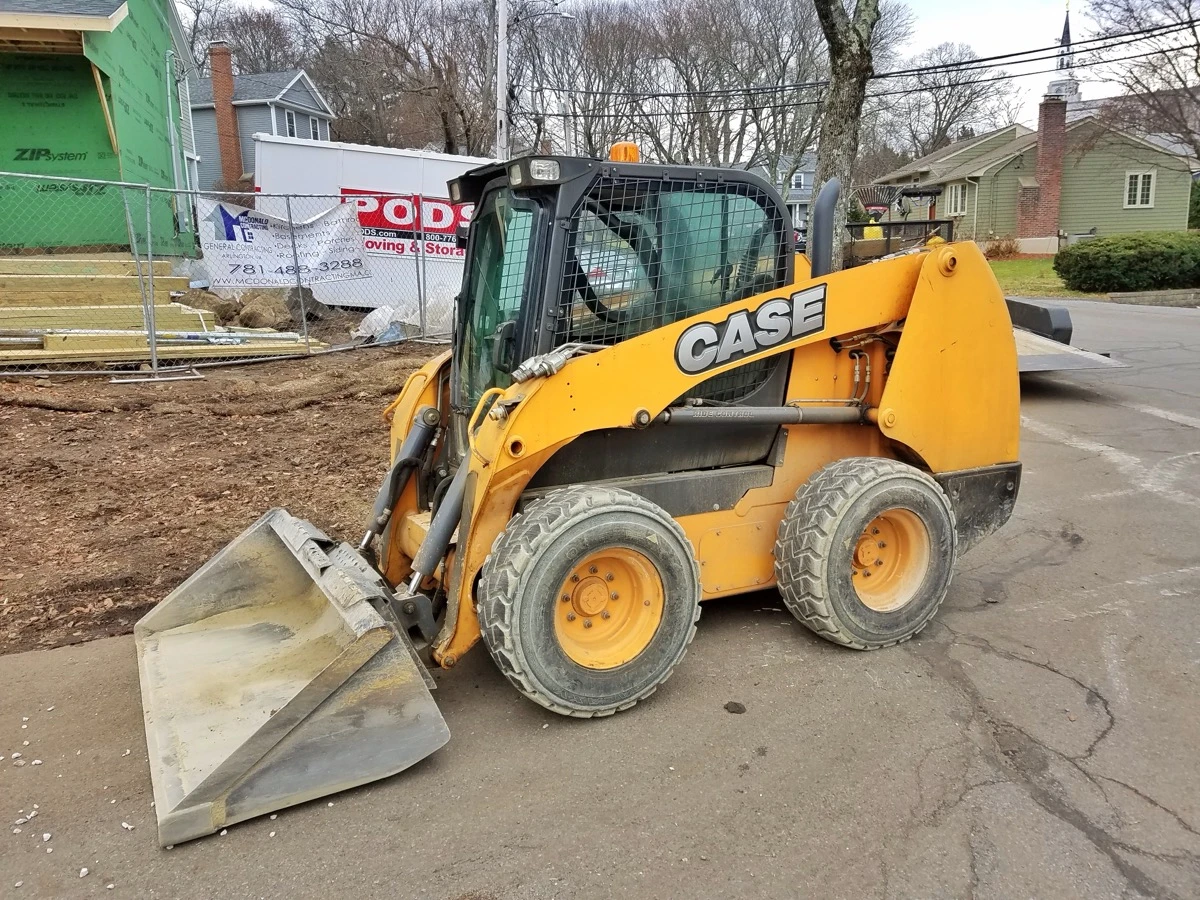

Then look at the quick attach plate. Bobcat calls theirs the Bob-Tach. The wedges and plate wear with heavy use. Hook up an attachment and make sure it locks solid with no rocking. Look for cracks and welds on the plate and on the lift arms. Fresh welds can mean the machine was overloaded or damaged.
Tires or Tracks
On a wheeled machine, tires wear fast on hard surfaces. Uneven wear side to side can point to a drive problem.
On a compact track loader, the undercarriage is often the single biggest cost. Rubber tracks, rollers, sprockets and idlers all wear, and they wear fast on rock and concrete. We measure them and estimate what life is left. This matters a lot on track loaders like the Cat 259D, Bobcat T770, Kubota SVL75 and Deere 333G. Check the final drives on these too. Listen for noise and look for leaks.
Engine, Cooling and Emissions
Start the machine cold if you can. Hard starting, heavy smoke or a lot of blowby from the breather all point to engine wear.
Skid steers pack the engine into a tight space, so the cooler can clog with dust and debris. Look at it. A packed cooler means the machine may have run hot. Newer machines also have a DPF and other emissions parts. Confirm the machine can regen and shows no warning lights.
Hours, Records and Paperwork
The hour meter is only a start. Compare it with the wear on the pedals, the seat, the pins and the tracks. A low reading on a machine that looks worn out is a red flag. Ask for service records and oil sample history if there is any.
Records should match the maker's schedule. Bobcat's S70 manual calls for grease on the lift arms, cylinders, Bob-Tach, pivot pins and wedges every 10 hours. It calls for new engine oil every 150 hours, a new hydraulic filter every 500 hours, and new hydraulic and chaincase fluid every 1,000 hours, or every 12 months if that comes first (Bobcat S70 Operation and Maintenance Manual). On a loader with 3,000 hours, that adds up as shown below. It is a worked example from that one manual, so check the schedule for the brand you are buying.
Read our guide on how many hours is a lot for a skid steer to turn the reading into questions.
Also check that the serial number plate is present and matches the bill of sale. Ask the seller for proof they own it.

Safety Checks You Should Not Skip
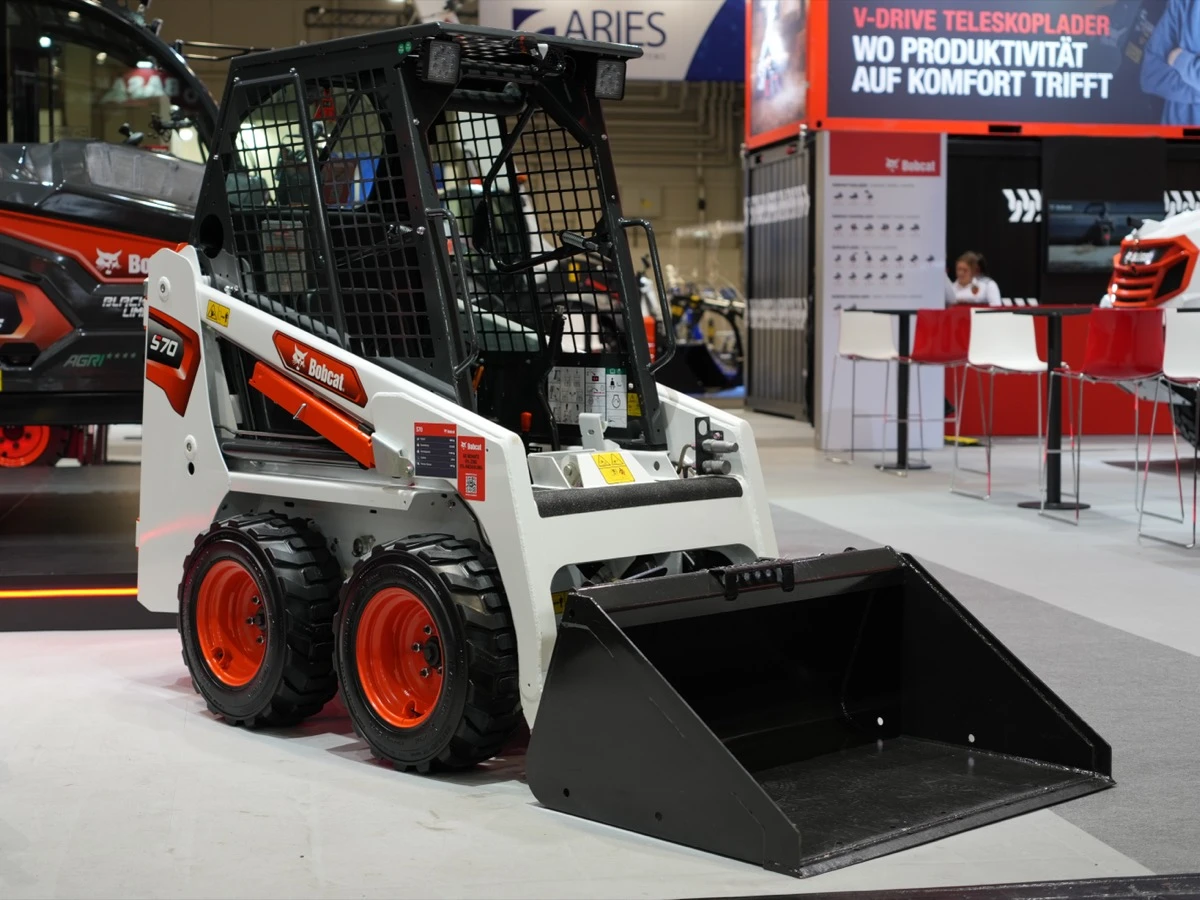
- Seat bar and seat switch. The lift arms and drive should lock out when the bar is up or the operator is out of the seat. Bobcat's manual says lift and tilt must not work with the seat bar raised.
- Cab frame. The rollover and falling object frame should have no cracks or bends.
- Lift arm support. The arm support device should be there and work. In 10 of 22 skid steer deaths reported to NIOSH from 1992 to 1995, the worker was under a raised bucket (CDC MMWR).
- Parking brake, lights and backup alarm. All should work.
A machine with a bypassed interlock is a warning sign about the whole machine. OSHA found 100 skid steer accidents in its records from 1997 to 2007. Bypassed safety features, like seat belts and control interlocks, were the direct cause of 20 percent of them, and all but one of those were fatal (OSHA Safety and Health Information Bulletin, January 12, 2009). Look for jammed seat bars, cut wires at the seat switch and missing belts.
Want a second set of eyes? A heavy equipment inspection covers all of this with measured wear, fluid samples and a photo report.
Where the Facts Live
| What we cited | Where it came from |
|---|---|
| S70 Operation and Maintenance Manual, service schedule | Bobcat, accessed October 2026 |
| Hazards Associated with Operating Skid-Steer Loaders with Bypassed and/or Improperly Maintained Safety Devices, SHIB 01-12-2009 | OSHA, accessed October 2026 |
| Skid-Steer Loader-Related Fatalities in the Workplace, United States, 1992 to 1995 (MMWR) | CDC, accessed October 2026 |
FAQ
- What is the most expensive thing to fix on a skid steer?
- The drive system and, on track loaders, the undercarriage are usually the costliest. Drive motors, final drives and a full set of tracks and rollers can each be a big bill, so check them first.
- How do I check a skid steer for hydraulic drift?
- Lift the bucket with a load in it and hold it in the air with the engine running. Watch the arms and bucket for a few minutes. If they sink or roll forward on their own, the cylinders or valves are worn.
- Should I buy a skid steer that came from a rental fleet?
- It can be a fine buy, but expect hard hours and many operators. Inspect it more closely, not less, and pay attention to pins, the drive and the attachment plate.
- Wheeled skid steer or compact track loader?
- Wheeled machines are faster and cheaper to run on hard ground. Track loaders float better on soft ground but have a costly undercarriage. Inspect the tires or tracks with that cost in mind.
Buying something used? We work for the buyer, never the seller, and hand you a photo report with a plain verdict.
Pick your equipment type and request an inspection