The Used Tractor Buying Checklist
Buy the used tractor that passes nine checks in this order. Safety gear comes first, then fluids, PTO, hitch, hydraulics, test drive, tires, paint and papers. Most sale tips stop at hours and looks. The costly surprises hide in the parts nobody photographs.
Follow Equipment Reporters in Google Search
- No ROPS or seatbelt means a retrofit bill or a real risk
- Missing PTO shields are common on used tractors
- Check fluids cold, before the seller warms it up
- Run the PTO, hitch and loader under load
- Search for liens under the seller's name and business
Start With the Safety Gear
We start every tractor at the same spot. It isn't the engine. It's the rollbar, the seatbelt and the PTO shields. They cost you the most if they're missing, and sellers rarely list them.
Look for a rollover protective structure, or ROPS. It's the hoop over the seat, or a cab built to the same job. OSHA requires a ROPS and a seatbelt on farm tractors over 20 horsepower built after October 25, 1976, when an employee drives them (OSHA, 29 CFR 1928.51). The rule allows a few low profile tractors in orchards, vineyards and low barns.
Even on your own land, the hoop matters. A NIOSH researcher found tractor overturn deaths fell 28.5 percent from 1992 to 2007. Over about the same years, the share of farm tractors with a ROPS rose from 38 to 59 percent. States with the fewest ROPS had five times the overturn death risk (Myers, Journal of Agromedicine, 2010).
So check three things. Is there a hoop or a ROPS cab? Is it bent, cut or welded? Does the seatbelt latch and hold? A hoop that folds down should lock up firmly. If any of this is missing, price the fix into your offer.
Then look at the PTO shields. Cornell's farm safety program says a 540 rpm PTO shaft turns 9 times a second, and a 1,000 rpm shaft turns 16.7 times a second. It says every PTO setup needs a master shield on the tractor, a shield on the shaft and one on the implement. It also warns that shields are often missing on used tractors, and a broken one is as bad as none (Cornell Agricultural Health and Safety Program, Power Take Off Safety).

Read the Fluids Before It Runs
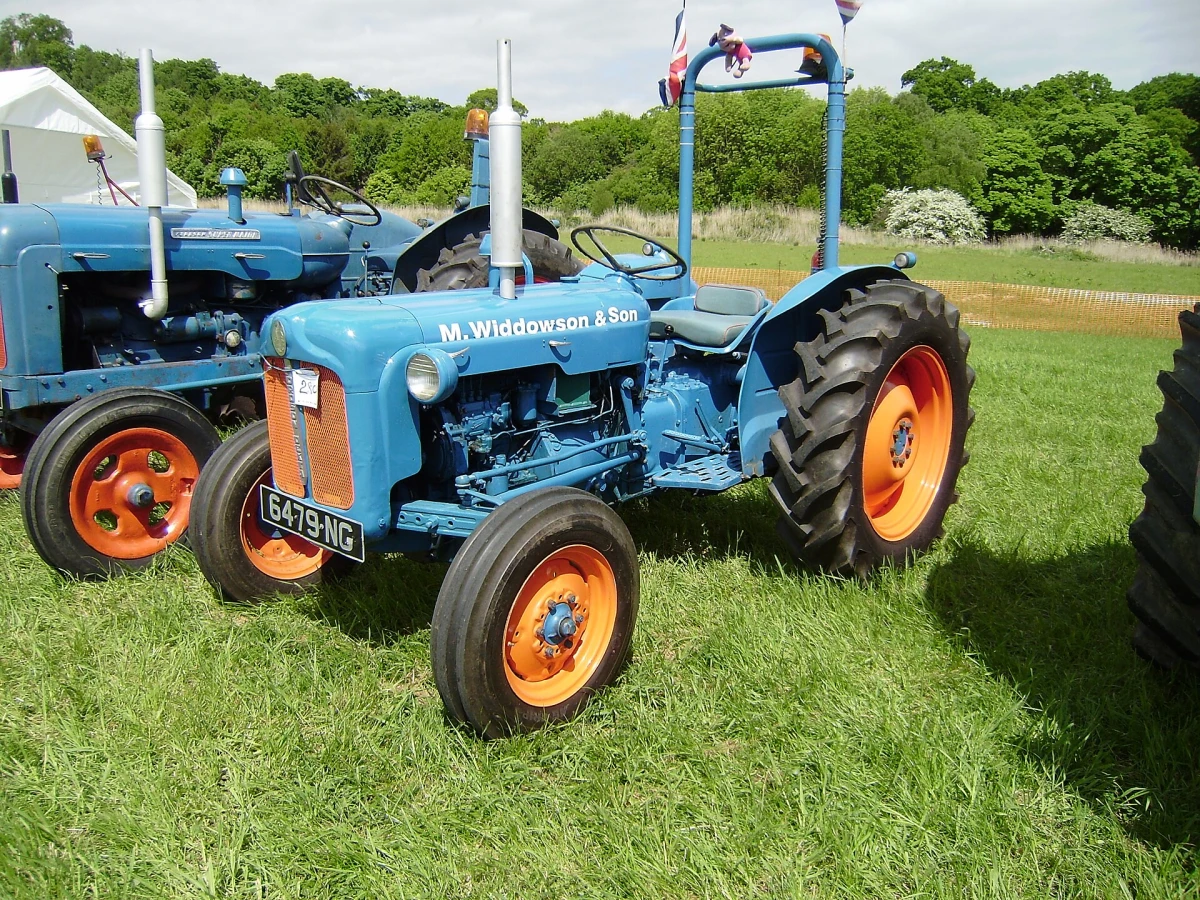
Ask the seller not to start it before you get there. A cold engine tells the truth. A warm one hides hard starts, smoke and knocks.
An agricultural trainer's buying guide for the University of Vermont lists the fluid checks worth doing first (Shane LaBrake, Buying a Tractor, April 10, 2014).
- Engine oil. Check the level and the color. Milky oil can mean coolant is getting in.
- Coolant. It should be clear, not rusty, and at the right level.
- Hydraulic and transmission fluid. Many tractors share one fluid for both. Check the level. Then look around the dipstick. A spotless dipstick on a dirty tractor can mean someone just topped it off.
- Fuel. A tank that sat low can collect water. Look at the fuel filter or sediment bowl.
- Air filter and radiator. The filter should be there and clean. The radiator fins should be clear of chaff and not crushed.
Then start it. Watch the exhaust and listen. A little smoke at first can be normal on an old diesel. Smoke that won't clear, or a knock that gets louder, is not.
Work the PTO, Hitch and Hydraulics
These are the parts that do the work. Test each one with the tractor running.
- PTO. Engage it and let it spin. It should run smooth and quiet. Look at the splines on the stub for twisting or chewed edges. Check which speed it runs, 540 or 1,000, and match it to your implements.
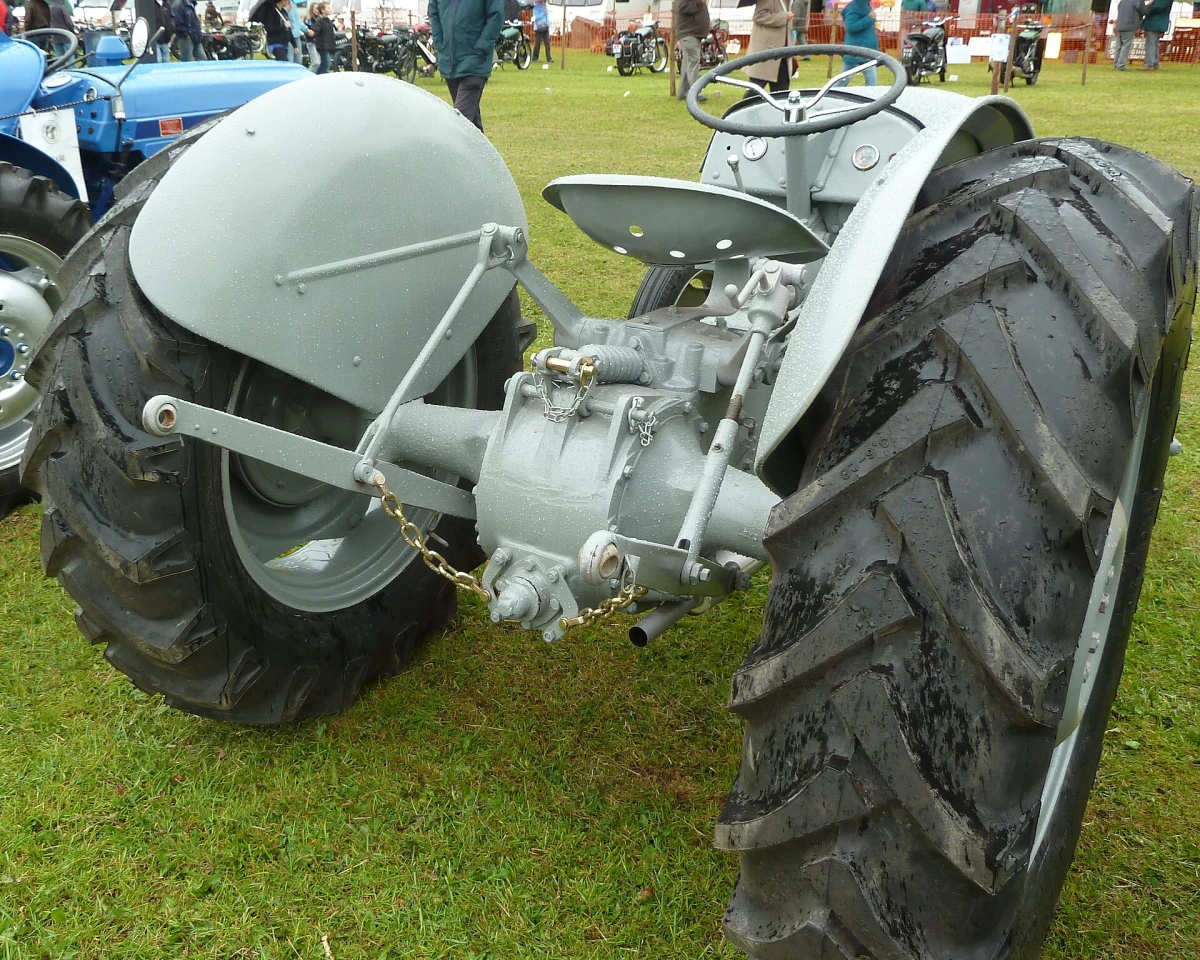
- Three point hitch. Raise and lower it a few times. Grab each lower arm and feel for slop. LaBrake lists damaged lower links as a red flag.
- Hitch drop test. Lift a heavy implement and shut the engine off. If it sinks while you watch, the lift has an internal leak.
- Remotes. Count the rear hydraulic outlets. Make sure there are enough for what you run.
- Hoses and cylinders. Look for wet spots, cracked covers and fresh dirt stuck to oil.

Know what power you're really buying. LaBrake's example is a New Holland TC45. It's rated 45 horsepower at the engine. It claims 39.6 at the PTO, and 37.8 with the hydrostatic drive. The PTO number is the one your mower or tiller feels. Compare tractors on PTO horsepower, not the ad's engine number.
Drive It Like You Already Own It
Drive it on flat ground and on a grade if you can. Run every gear or the full range of the hydrostatic pedal.
- Steering. Turn lock to lock. Play at the wheel or a clunk up front points to worn steering or front axle parts. On a 4WD tractor, look at the front axle pivot for slop.
- 4WD. Engage it and drive. LaBrake notes 4WD can add up to 40 percent more pulling power, so make sure you're getting it.
- Brakes and clutch. Each rear brake should stop its wheel. The clutch should engage smooth without shudder or slipping.
- Loader. If it has one, lift a full bucket. Curl and dump. Watch for drift and slow lifts once it's warm.
- Gauges and lights. Every gauge should read. Write down the hour meter.
Hours matter, but they're one clue among many. Check that the hours match the wear on the pedals, seat and steering wheel. For hour bands by tractor size, see how many hours is a lot for a tractor.
Tires, Paint and the Small Tells
Rear tractor tires are big and costly. Look for missing lugs, cracks in the sidewall and dry rot. LaBrake also says to look for rust on the rim around the valve stem, and to ask if the tires hold liquid ballast.
Now look at the paint. Fresh paint isn't a crime. Paint over hoses, belts, the alternator or the battery is. That's a fast flip, and it can hide leaks and cracks. LaBrake flags this too.
Last, the small stuff. A cracked seat, a broken glass panel or a sagging cab door costs less than an engine. But it tells you how the tractor was kept. Shop and parts manuals plus service receipts tell you more. A seller with a folder of receipts is a better bet than one with a story.
Prove It Is the Seller's to Sell
The tractor can pass every test and still be a bad buy. If a lender has a lien on it, or it was stolen, you can lose the tractor and the money.
Start with the serial plate. LaBrake lists a present and readable tag as part of the condition check. Match that number to the bill of sale and any loan papers or receipts. If the plate is missing, ground off or painted over, stop.
Then search for liens. Farm Equipment magazine explained that a lender usually files a UCC lien with the Secretary of State where the borrower lives. It also warned of the trap most buyers miss. A tractor can be paid off and still sit under a blanket lien that covers all of the owner's equipment (Farm Equipment, June 14, 2012). Search the seller's exact name, plus any farm or business name they use. If a lien shows up, ask for a written release for that tractor before you pay.
Theft is real, too. In 2012, 10,925 heavy equipment thefts were reported to police, and tractors were among the three most stolen types. Only 20 percent of the stolen equipment was recovered (Government Fleet, October 11, 2013). A deal far under market, cash only, with no papers, fits that picture.
The Checklist to Take With You
Keep this on your phone at the sale. Any one row is a reason to ask for money off, or to walk.
| Check | What to do | Walk away or bargain if |
|---|---|---|
| ROPS and belt | Look for a hoop or ROPS cab and latch the belt | No ROPS, a cut or welded hoop, or a belt that won't latch |
| PTO shields | Find the master shield and shaft shields | Shields missing or broken |
| Fluids | Check oil, coolant and hydraulic fluid cold | Milky oil, rusty coolant or a freshly wiped dipstick |
| PTO | Engage it and check the splines | Noise, shake or twisted splines |
| Hitch | Lift a heavy implement, engine off | It sinks, or the lower arms have slop |
| Test drive | Steer, brake, clutch, 4WD and loader | 4WD won't engage, or brakes and clutch slip |
| Tires | Look for dry rot and rim rust at the valve | Cracked sidewalls or rusted rims |
| Paint | Look at hoses, belts and wiring | Paint over hoses, belts or the alternator |
| Papers | Match the serial plate and search for liens | No plate, no papers, or a lien with no release |
The seller will always think it's worth more than you do. Bring this list, and every missed row becomes part of your offer.
Read These Too
- How many hours is a lot for a tractor
- Is a pre-purchase inspection worth it
- What a pre-purchase inspection includes
Want a second set of eyes at the sale? We inspect farm tractors for the buyer, never the seller. See our agricultural tractor inspection.
Where the Facts Live
| What we cited | Where it came from |
|---|---|
| ROPS and seatbelt rule for tractors built after October 25, 1976 | OSHA, 29 CFR 1928.51, opened October 2026 |
| Overturn deaths down 28.5 percent, ROPS share 38 to 59 percent, five times the risk | Myers, Journal of Agromedicine, 2010, via CDC Stacks, opened October 2026 |
| PTO speeds and the three shields | Cornell Agricultural Health and Safety Program, opened October 2026 |
| Fluid, tire, paint, serial tag and PTO horsepower checks, 4WD pull | Shane LaBrake, Buying a Tractor, 2014, opened October 2026 |
| UCC liens and blanket liens on paid off equipment | Farm Equipment, 2012, opened October 2026 |
| 2012 equipment thefts and the 20 percent recovery rate | Government Fleet, 2013, opened October 2026 |
FAQ
- Should I buy a used tractor without a ROPS?
- Only if the price covers adding one or you'll use it where it can't tip. A ROPS and a seatbelt are the main protection in an overturn, and OSHA requires both on most farm tractors built after October 25, 1976 that employees drive.
- How do I check a used tractor for liens?
- Search the UCC records at the Secretary of State where the seller lives. Search the seller's exact name and any farm or business name. If a lien shows up, get a written release for that tractor before you pay.
- How do I find out what a used tractor is worth?
- Compare sold prices, not asking prices, for the same model with similar hours, the same drive and the same loader or attachments. Then take off for every failed check on the list.
- What is the most important thing to check on a used tractor?
- Start with safety gear and the papers. A missing ROPS or PTO shield costs money to fix, and a lien or a missing serial plate can cost you the whole tractor. Then check the fluids, hitch and hydraulics.
- Is fresh paint on a used tractor a bad sign?
- Not by itself. Paint over hoses, belts, the battery or the alternator is a bad sign. It points to a quick flip that may hide leaks or cracks.
Buying something used? We work for the buyer, never the seller, and hand you a photo report with a plain verdict.
Pick your equipment type and request an inspection