What to look for when buying a used mini excavator
When buying a used mini excavator, look at the undercarriage first, then the swing and pins, then every hydraulic function under load, then which engine it has, then the papers. On a mini, the undercarriage alone can be close to half the upkeep cost.
Follow Equipment Reporters in Google Search
- Tracks, sprocket, idlers and rollers come first
- Measure track sag and compare it with the manual
- Run every function cold, then hot, and watch for drift
- Engines under 19 kW skip the strict Tier 4 soot limit
- Match the serial plate to the bill of sale
The Order We Check In
We look at a lot of used compact equipment. Mini excavators fool more buyers than almost anything else, because a clean cab and fresh paint hide what matters. We check them in this order, worst money first.
- Undercarriage. Rubber tracks, sprocket, idlers and rollers. This is where the big bills live.
- Swing and pins. Play in the swing bearing and the boom, arm and bucket pins.
- Hydraulics. Every function, cold and hot, with a load. Watch for drift, slow travel and leaks.
- Engine. Cold start, smoke and blowby. Also find out if it has a particulate filter, because that changes upkeep.
- Papers. Serial plate, bill of sale, hours and service records. They should all tell one story.
If a machine fails the first two, you can stop there. Everything else costs less to fix.
Three Things Other Pages Skip
As of October 2026, the first plain Google result for this question is a dealer post from the United Arab Emirates about excavators in general. It never says the word mini, gives no numbers and cites no sources. The rest of page one is forum threads, Quora answers and dealer pages pointing back to their own stock.
Three things are missing from nearly all of them. First, real track sag numbers, so you know what loose looks like. Second, the engine question. The same model can ship with two engines, and one of them carries a soot filter that needs care. Third, a way to check that the machine is really the seller's to sell. This guide covers all three.
Start Under the Machine
Start low. Construction Equipment Guide reported that the undercarriage can make up almost 20 percent of a mini excavator's purchase price and nearly 50 percent of its upkeep cost (Construction Equipment Guide, February 12, 2013). Buy a worn one and you have bought that bill.
Walk all the way around both tracks. Camso, a large rubber track maker, tells owners to look for lost lugs, cuts, punctures, chunking and exposed cables, and to check that the sprockets, idlers and rollers have no flat spots or odd wear (Camso, Mini Excavator Track Guide, 2021). Exposed steel cord means the track is done.
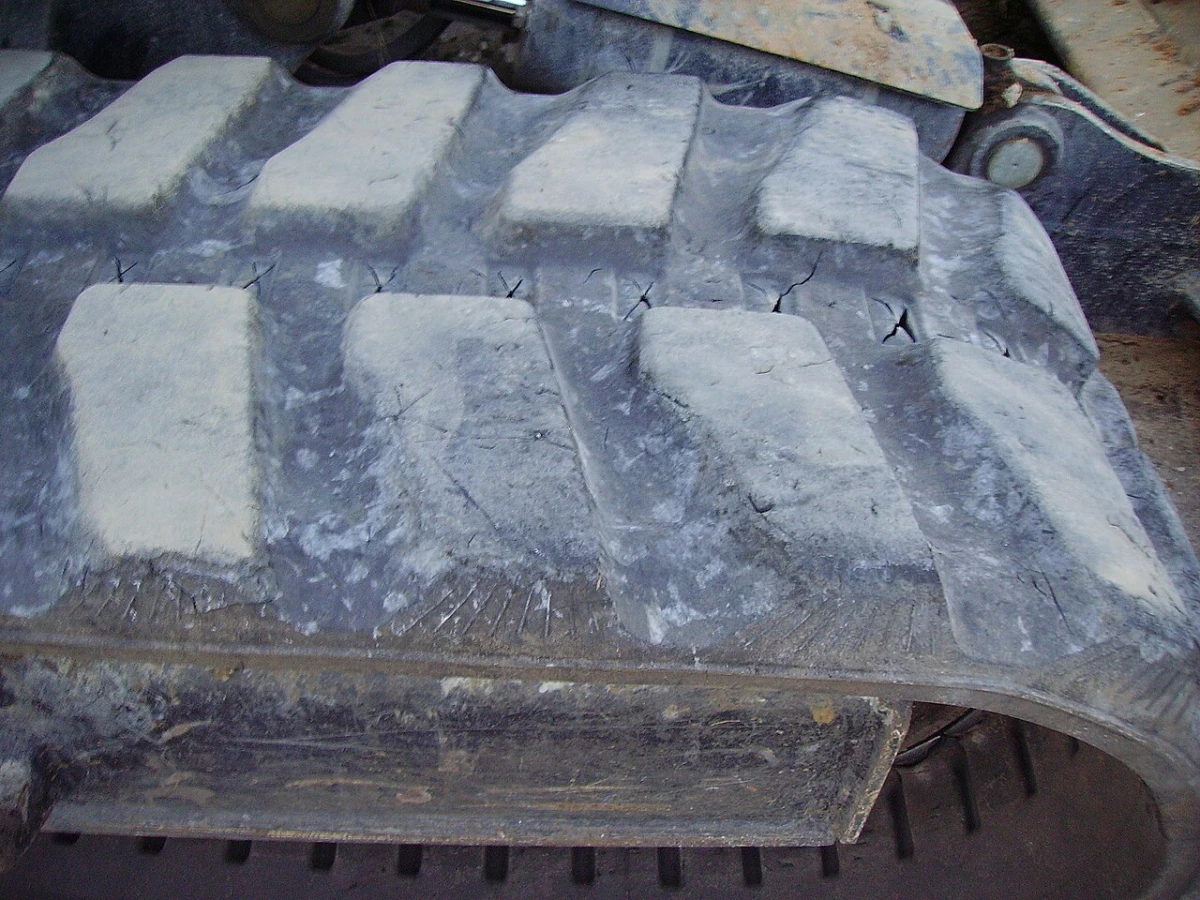

Look hard at the sprocket teeth. Camso says sprockets, idlers and rollers are heat treated, and once that hard outer layer wears off, wear speeds up. It also says a new track on a worn undercarriage will wear out much sooner. So a seller who brags about new tracks on old sprockets has sold you half a job.
Then measure the sag. Raise the machine with the boom and blade so the tracks clear the ground, and measure the gap at the middle roller. Camso gives these general numbers by machine weight.
Sources do not agree. A Terex product man told Construction Equipment Guide to look for about 10 to 15 mm of free space under the center roller, and to check tension every 10 to 15 hours or every day. Camso says check after the first 30 hours, then every 50. That is why the manual matters. Ask the seller for it, or look up the number before you go. A track far looser than spec on a machine the seller says was kept up is a red flag. It means nobody was checking.
Rock the Swing and Shake the Pins
Next, the parts that hold the machine together. These are slow, costly fixes, and they tell you how the machine was treated.
- Swing bearing. Set the bucket on the ground and lift the front of the tracks a little. Watch where the upper house meets the lower frame. If the house rocks or clunks, the bearing is worn.
- Swing motor. Swing full left and full right. It should start, stop and hold without a bang or a creep.
- Pins and bushings. Have someone curl and uncurl the bucket in small moves while you watch each joint. Slop you can see is wear you will pay for.
- Grease. Look at the grease fittings. Fresh grease at every joint says someone cared. Dry, rusty pins say the opposite.
- Blade and boom swing. Most minis have a dozer blade and a boom that swings side to side. Check both cylinders for leaks and the pins for play.
Also look for welds on the boom, arm and blade. A clean factory weld is fine. A fresh bead with new paint over it is a crack someone fixed. Ask why.
Run Every Hydraulic Function
Start the machine cold if you can. Ask the seller not to warm it up before you arrive. Then run every function, one at a time, and then together.
- Drift test. Lift a full bucket of dirt and hold it off the ground. Shut the machine off and wait a few minutes. If the bucket sinks, a cylinder or valve is leaking inside.
- Travel test. Drive straight on flat ground both ways. A mini that pulls to one side may have a weak drive motor. Look under the drive motors for oil.
- Power test. Dig, then lift and swing at once. Each move should stay smooth. A machine that bogs or slows when hot may have a tired pump.
- Auxiliary lines. If you plan to run a breaker, auger or thumb, check that the aux circuit works and does not leak at the couplers.
- Hoses. Look for wet spots, rubbed through covers and hoses held with tape or zip ties.
If the deal is big enough, pull an oil sample from the hydraulics and the engine and send them to a lab. A sample shows wear metal, dirt and coolant that you cannot see with your eyes.
Know Which Engine You Are Buying
This is the part nearly every guide skips. Under federal rules, a small diesel's soot limit depends on its power.
The EPA table for nonroad diesel engines sets a soot limit of 0.40 grams per kilowatt hour for engines from 8 to under 19 kW, from 2008 on. For engines from 19 to under 37 kW, the limit dropped to 0.03 grams from 2013 on (EPA, Nonroad Compression-Ignition Engines: Exhaust Emission Standards, March 2016). That is about 13 times stricter. 19 kW is about 25.5 horsepower.
| Engine power | Tier 4 soot limit | EPA useful life | EPA warranty period |
|---|---|---|---|
| 8 to under 19 kW (about 11 to 25 hp) | 0.40 g/kWh from 2008 | 3,000 hours or 5 years | 1,500 hours or 2 years |
| 19 to under 37 kW (about 25 to 50 hp) | 0.03 g/kWh from 2013 | 5,000 hours or 7 years | 3,000 hours or 5 years |
The useful life is how long the engine must meet the emissions rules. It is not how long the engine lasts. Many run far longer.
Makers know about that line. Construction Business Owner reported in 2015 that many makers keep their 3.5 ton machines under the 25.4 horsepower line so they can skip exhaust aftertreatment. It also said a filter equipped machine needs regeneration, which burns soot out of the filter and sometimes means parking the machine for a short time (Construction Business Owner, August 4, 2015).
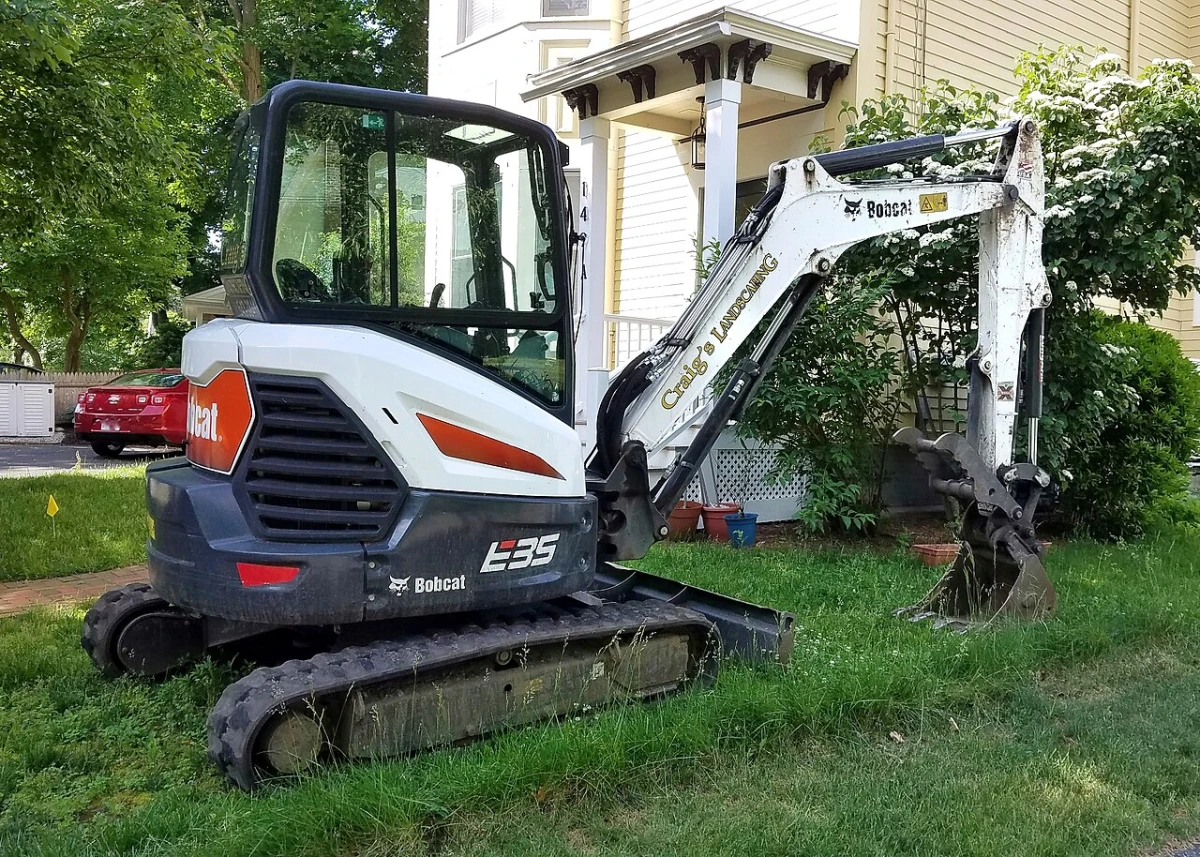

That matters to a buyer. Construction Equipment reported that the Bobcat E35 R2 came with a 24.8 hp base engine or a 33.2 hp option (Construction Equipment, October 28, 2021). Same name on the arm, two different engines. One sits under the 19 kW line. One sits over it.
So read the engine plate, not the listing. If the engine is over 19 kW and built in 2013 or later, ask if it has a particulate filter, when it last ran a regen and if the screen shows any warnings. A filter is not a reason to walk away. A neglected one is a reason to ask for money off.
Hours, Records and the Serial Plate
Hours matter, but less than buyers think. A rental mini can rack up hard hours from many drivers. A private one may sit for years. Divide the hours by the age to see how hard it ran, and compare the hours to the wear on the pedals, seat and pins. We go deeper in how many hours is a lot for an excavator.
Then check that it is the seller's to sell. Find the serial number plate on the machine and match it to the bill of sale, any title or loan papers and the service records. Theft is a real risk with machines this easy to trailer. In 2010, a report from the National Equipment Register and the National Insurance Crime Bureau counted 13,374 heavy equipment theft reports, and only 19 percent of stolen equipment was recovered (Government Fleet, July 26, 2011). If the plate is missing, ground off or painted over, stop.
Last, ask for the records. Oil changes, track changes and repair bills all carry hours and dates. They should line up with the meter and climb in order.
The Walk Away List
Print this or keep it on your phone. Any one of these is a reason to walk away or ask for a lot of money off.
| Area | What to do | Walk away if |
|---|---|---|
| Tracks | Look for cuts, lost lugs and steel cord | Steel cord shows, or new tracks sit on hooked sprockets |
| Track sag | Raise the machine and measure at the middle roller | Far off the manual number and the seller cannot explain it |
| Swing | Lift the tracks with the bucket and watch the house | The house rocks or clunks on the frame |
| Hydraulics | Hold a full bucket with the engine off | The bucket sinks, or the machine slows when hot |
| Engine | Cold start, then check smoke and blowby | Heavy smoke or warning codes on the screen |
| Papers | Match the serial plate to the bill of sale | The plate is missing or does not match |
Looking at a different machine? See what to look for when buying a used skid steer. Still deciding if a check is worth it? Read is a pre-purchase inspection worth it.
If you want it measured for you, our heavy equipment inspection covers the undercarriage, swing, pins, hydraulics and engine, with model guides for minis like the Bobcat E35, Kubota KX057 and Cat 308. You get a photo report with a plain verdict.
Where the Facts Live
| What we cited | Where it came from |
|---|---|
| Tips for Tracking Undercarriage Wear on Mini Excavators, February 12, 2013 | Construction Equipment Guide, accessed October 2026 |
| Track Installation Guide and Operational Guidelines, Mini Excavators, 2021 | Camso, accessed October 2026 |
| Nonroad Compression-Ignition Engines: Exhaust Emission Standards, EPA-420-B-16-022, March 2016 | US EPA, accessed October 2026 |
| Tier 4 Technology in Compact Excavators, August 4, 2015 | Construction Business Owner, accessed October 2026 |
| Bobcat E32, E35 R2 Excavators, October 28, 2021 | Construction Equipment, accessed October 2026 |
| Report: 19% of Stolen Equipment Recovered in 2010, July 26, 2011 | Government Fleet, accessed October 2026 |
FAQ
- Is 10,000 hours a lot on an excavator?
- On a mini excavator, yes. It is a hard working machine by then. It can still be worth buying if the records show the undercarriage, pins and pump were rebuilt, and the price reflects the hours.
- How tight should the tracks be on a mini excavator?
- Use the number in the operator's manual. As a general guide, Camso lists about 15 mm of sag for machines under 2.5 tonnes, 25 mm for 2.5 to 5.5 tonnes, and 35 mm for 5.5 to 14 tonnes, measured at the middle roller with the machine raised.
- Does a used mini excavator have a DPF?
- It depends on the engine. Engines under 19 kW, about 25 hp, face a looser soot limit and many skip the filter. Engines from 19 to under 37 kW built in 2013 or later must meet a much tighter limit. Read the engine plate and ask about regen.
- How do you test the hydraulics on a used mini excavator?
- Run every function cold and hot. Hold a full bucket off the ground with the engine off and watch for sinking. Drive straight both ways, and look for leaks at cylinders, hoses and drive motors.
- What is the most expensive thing to fix on a mini excavator?
- Usually the undercarriage. Construction Equipment Guide reported it can be nearly 50 percent of a mini excavator's upkeep cost. A worn swing bearing or hydraulic pump can also run high.
Buying something used? We work for the buyer, never the seller, and hand you a photo report with a plain verdict.
Pick your equipment type and request an inspection