How many hours is a lot for a tractor?
On a used diesel tractor, tractor hours start to count as a lot past about 4,000 to 5,000. Dealer guides put typical life at 4,000 hours and major engine work around 5,000. But Iowa farmers put the average working life at 8,355 hours, so the meter only tells you which parts to check next.
Follow Equipment Reporters in Google Search
- Dealer guides put typical life at 4,000 hours and up to 10,000
- Iowa farmers estimated 8,355 hours on average
- Divide hours by age to see how hard it worked
- Low hours cost money too, per hour of use
- The meter, the records and the wear must agree
How the Hours Usually Read
No single number settles it. Still, the hours tend to read like this on a used diesel tractor.
- Under 1,000 hours. Low. Two dealer guides say the average used tractor for sale has about 1,000 hours on it (Atlantic Tractor, July 20, 2023).
- Around 2,500 hours. The same guides say hydraulic pumps, clutches and injectors may need service around here.
- Around 5,000 hours. They say the engine may need major work by this point.
- 8,000 hours and up. High, but not the end. In an Iowa State study, farmers put the average working life of a tractor at 8,355 hours (Abdelmotaleb, Iowa State University, 1989).
Those numbers are guides, not limits. A greased, serviced tractor at 5,000 hours can be a better buy than a neglected one at 1,500.
What One Real Study Says About Brand
Most pages on this question are dealer blogs and forum threads. The two dealer posts at the top of Google say the same thing almost word for word. Tractors last at least 4,000 hours, some reach 10,000, and the brand matters a lot (Tatum Motor, November 11, 2020). Neither one cites a source for any of it.
The one real study we could find says something different about brand. Iowa State surveyed Iowa farmers on what they spent to repair and maintain their tractors. It found the make had no effect on repair costs. Age mattered a lot. And the single biggest factor in the hourly repair bill was how many hours a year the tractor ran.
That study is from 1989, so read it as a pattern, not a price list. But the lesson holds. Buy the tractor in front of you, not the color of the paint.
Turn Hours Into Hours per Year
Before you drive out, do one sum. Divide the hours by the age in years. That tells you how hard the tractor worked.
Atlantic Tractor says most owners put 100 to 200 hours a year on a tractor. The University of Illinois farm cost model assumes a working farm tractor runs 300 hours a year for 10 years (farmdoc, Machinery Cost Estimates: Tractors, August 2025). A worked example using those rates follows.
| Use | Hours a year | Hours after 10 years |
|---|---|---|
| Light hobby or acreage | 100 | 1,000 |
| Typical owner | 200 | 2,000 |
| Working farm tractor | 300 | 3,000 |
Now read the listing. A 10 year old compact tractor with 600 hours averaged 60 a year. That is very light. It may be a great find, or it may have sat in a field with old fuel, stale oil and dry seals. A 10 year old utility tractor with 4,500 hours averaged 450 a year. That is a hard working machine, likely from a farm, a landscaper or a rental fleet. Neither is good or bad on its own. Each one tells you which questions to ask.

Low Hours Are Not Free
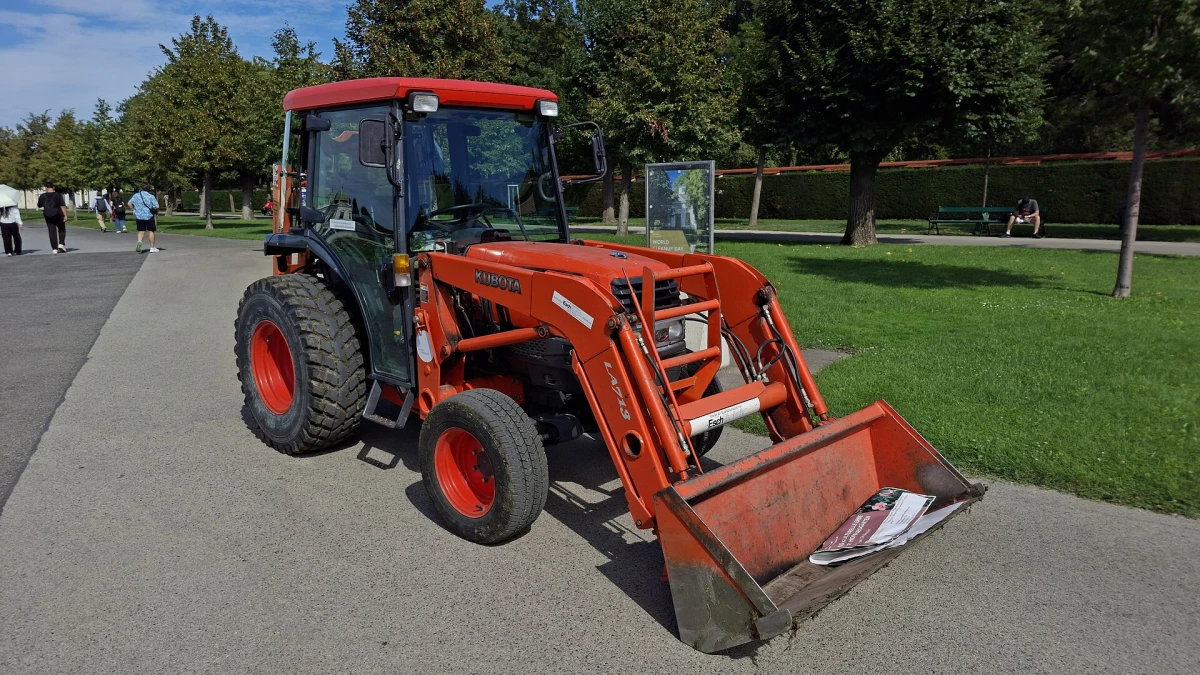
Buyers chase low hours. Few mention the cost. A tractor costs money every year whether it runs or not.
The University of Illinois worked this out for a 175 horsepower tractor with a 2025 list price of $333,793. Depreciation and interest alone come to $26,118 a year. That cost does not change with use. So the fewer hours the tractor runs, the more each hour costs.
What this means for you. A tractor that sat at 60 hours a year still lost value and still aged. Its rubber, seals and fluids aged too. A low hour tractor is worth more, but not as much more as the meter makes it look. Pay for condition, then pay a little for low hours.
What to Check at Each Hour Band
This is the checklist we work from. The bands follow the dealer guide numbers above. Use them to plan the questions, then let the wear give the answer.
| Hours | What it usually means | What to ask or check |
|---|---|---|
| Under 1,000 | Light use or a long sit | Why so few? Fuel age, cracked hoses, dry seals, rust in the fuel tank. Does the wear match the meter? |
| 1,000 to 2,500 | Early to mid life | Service records, loader pin play, hydraulic drift, PTO engagement, clutch feel on a gear drive. |
| 2,500 to 5,000 | Main wear window | Hydraulic pump speed under load, injector work, clutch or HST service, front axle play on a 4WD. |
| Over 5,000 | High hours, priced for it | Blowby and cold start, oil analysis, rebuild receipts, cracks or welds on the loader frame. |
A tractor over 5,000 hours with receipts for an engine overhaul can be a better buy than a 2,000 hour tractor that was never serviced. The band sets the questions. The answers set the price.
Can You Trust the Reading?
Hour meters fail, get swapped and roll over. Four checks catch most problems.
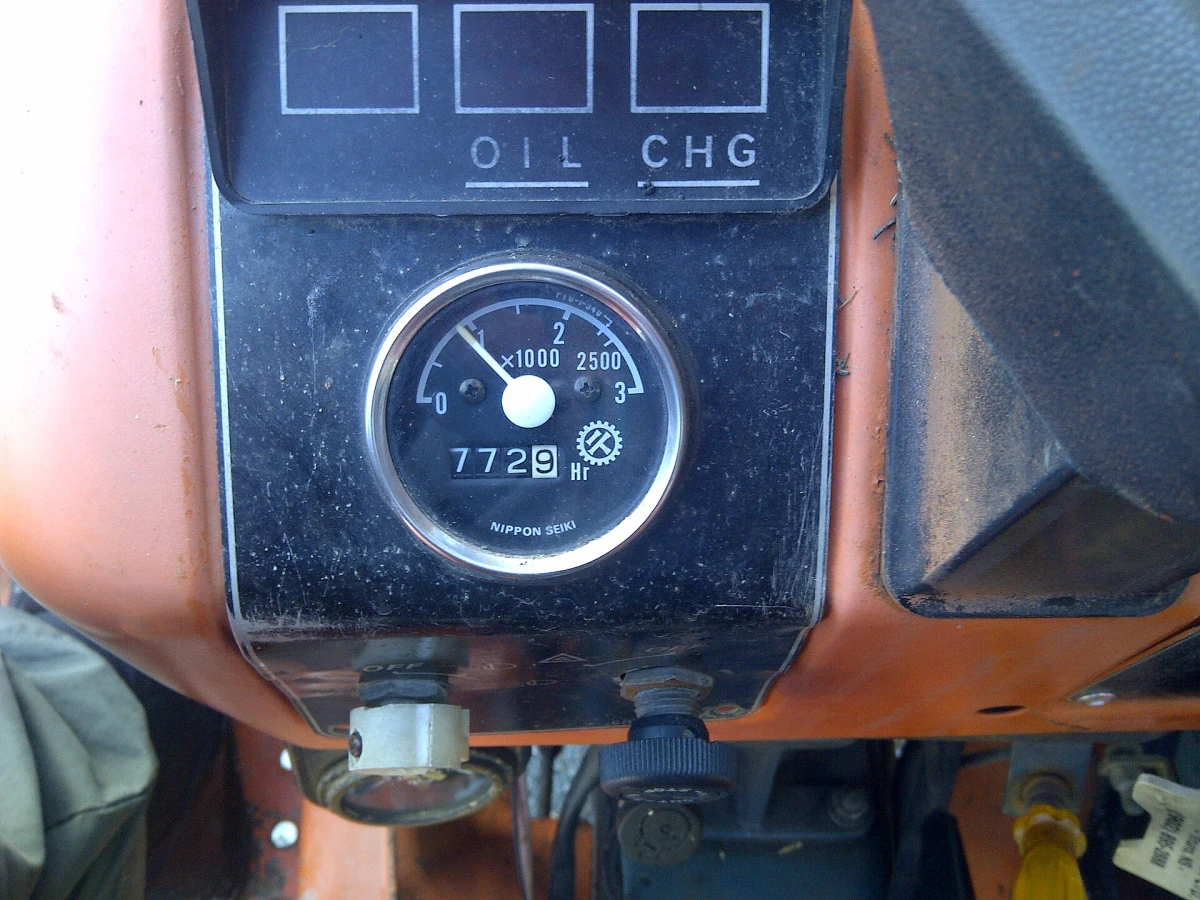

- Count the digits. On an older tractor with a mechanical meter like this one, 772 hours could be 10,772. Look at the age and the wear before you believe a low number.
- Check the computer. Many newer tractors store engine hours in the controller. A dealer scan tool can read them and compare them with the dash.
- Check the records. Oil change stickers, dealer invoices and oil sample reports all carry hours. They should climb in order.
- Check the wear. Worn pedals, a polished steering wheel, a torn seat and loose loader pins on a 700 hour tractor do not add up.
When the meter, the computer, the records and the wear agree, trust the number. When one is off, slow down and ask why.
Where the Hours Show Up First
On most used tractors the costly systems are the hydraulics, the PTO, the transmission and the engine. Raise the loader with a full bucket and watch for drift. Run the PTO with a real implement on it. Shift through every range and work the differential lock. Start it cold and look for smoke and blowby.
Ask what the tractor did for a living. Mowing and hauling are easy hours. Loader work, tillage and heavy PTO jobs are hard hours. Iowa State found that annual use drove the hourly repair bill more than anything else, so a hard working tractor earns a hard look.
The same thinking works on other machines. See how many hours is a lot for a skid steer and how many hours is a lot for an excavator. If you are still deciding whether a check is worth it, read is a pre-purchase inspection worth it.
If you want it measured for you, our agricultural and tractor inspection verifies the hour meter against the records, tests the hydraulics, hitch and PTO, samples the fluids, and hands you a photo report with a plain verdict.
Where the Facts Live
| What we cited | Where it came from |
|---|---|
| Machinery Cost Estimates: Tractors, August 2025 | University of Illinois farmdoc, accessed October 2026 |
| Repair and Maintenance Cost Analysis of Tractors and Combines. Iowa State University dissertation, 1989 | Abdelmotaleb, Ismail, accessed October 2026 |
| Judging a Used Tractor's Life Expectancy, July 20, 2023 | Atlantic Tractor, accessed October 2026 |
| Understanding the Life Expectancy of a Used Tractor, November 11, 2020 | Tatum Motor, accessed October 2026 |
FAQ
- How many hours is good for a used tractor?
- For most buyers, a diesel tractor under about 2,500 hours with service records is a good place to start. Divide the hours by the age. Around 100 to 300 hours a year is normal use.
- Is 3000 hours a lot for a tractor?
- Not by itself. At 3,000 hours a well kept diesel tractor is in mid life. Check the hydraulic pump, the clutch or hydrostatic drive, the injectors and the records.
- Is 5000 hours on a tractor too many?
- Not always. Dealer guides say major engine work often comes around 5,000 hours, so ask for rebuild receipts and an oil sample. A high hour tractor with records can still be a fair buy at the right price.
- What is considered low hours on a Kubota tractor?
- No maker publishes a cutoff. Under 1,000 hours is low for most compact and utility tractors. An Iowa State study found the make had no effect on repair costs, so judge a Kubota the same way you judge any tractor.
- Do tractor hour meters roll over?
- Older mechanical meters with four whole hour digits stop at 9,999.9 and start over. A low reading on an old, worn tractor may mean it has rolled past 10,000.
Buying something used? We work for the buyer, never the seller, and hand you a photo report with a plain verdict.
Pick your equipment type and request an inspection