Don't Buy a Used Backhoe Until You Check These 8 Spots
Check a used backhoe's hours against its service records first, then the eight spots that wear out on this machine and no other. A backhoe is two machines on one frame, a loader in front and a digger in back, so it has twice the joints to hide wear.
Follow Equipment Reporters in Google Search
- 1 in 5 backhoe engines needed major work before about 6,000 hours
- Half had failed by 8,500 hours
- Records should show an oil change every 500 hours
- Lift the rear wheels on the stabilizers and watch for creep
- In California, read the engine tier before you bid
Hours First, Then the Records
We look at used machines for buyers. On a backhoe, the hour meter starts the talk. It doesn't end it.
The best public numbers on backhoe life come from a contractor survey by Construction Equipment magazine. It covered 14 to 15 foot backhoe loaders. In its 2005 study, 20 percent of engines needed major repair or replacement before 6,000 hours. Half had failed by 8,500 hours. Most of the rest failed within the next 3,500 hours (Construction Equipment, September 28, 2010).
The same survey tracked how long backhoes stayed in main production work. The average was 9,180 hours in moderate use. In severe use, like rock, deep digging and constant attachment work, it fell to about 6,800 hours.
So what counts as a lot? A backhoe past 6,000 hours is in the zone where some engines need big work. Past 8,500, you should price in an engine job unless the records prove otherwise. That doesn't make a 7,000 hour machine a bad buy. It makes it a machine that needs proof.
The proof is the service file. John Deere's guide for the 310 G lists engine oil every 500 hours, transmission oil every 1,000, valve lash every 1,500 and hydraulic oil every 2,000. It also lists a lab sample of engine oil every 250 hours (John Deere, 310 G Replacement Parts Guide, March 2023).
Use that to test the paper. Take a 310 G with 4,000 hours as a worked example. On Deere's schedule, the file should show about eight engine oil changes, four transmission oil changes and two hydraulic oil changes. Other brands and older models have their own intervals, so check the manual for the one you're buying.
| Service on a 310 G | Deere interval | Count by 4,000 hours |
|---|---|---|
| Engine oil and filter | 500 hours | 8 |
| Engine oil lab sample | 250 hours | 16 |
| Transmission oil | 1,000 hours | 4 |
| Valve lash | 1,500 hours | 2 |
| Hydraulic oil | 2,000 hours | 2 |
A big gap in the file is a question for the seller. A file with no gaps and normal oil reports can outweigh a high meter. Deere's own support manager told the magazine that oil analysis trends are a better guide to engine life than industry averages.
Spot 1. The Swing Frame
The digger swings on a frame at the back of the machine. Two cylinders push it left and right. It takes a beating every time an operator slams it to a stop.
- Look for slop. Set the bucket on the ground. Swing gently each way and watch the swing frame pins. Movement before the frame turns means worn pins or bushings.
- Look for cracks. Check the welds around the swing cylinder mounts and the frame itself. Fresh paint in just that spot deserves a hard look.
- Listen at the end. The swing should slow and stop smoothly at each side. A loud bang at the end of every swing points to worn cushions in the cylinders.
Deere lists the swing cylinders and pivots as a daily grease point. Dry, crusted fittings tell you nobody did that daily job.
Spot 2. The Stabilizers
The stabilizers are the two legs that drop at the back while you dig. They carry the whole digging load. If they creep, the machine moves under you.
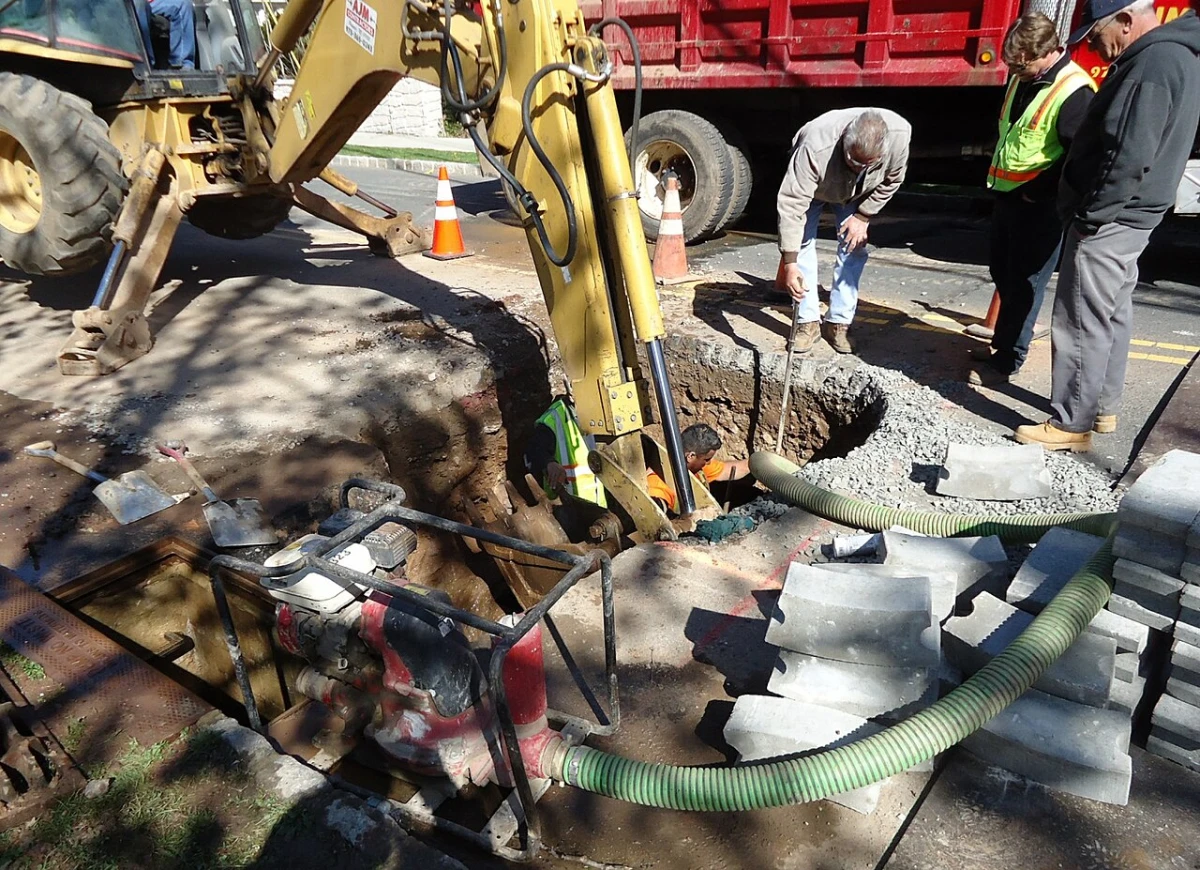

- Do the hold test. Lower both legs until the rear tires lift off the ground. Shut the engine off. Watch for five minutes. If the machine settles, a cylinder seal or holding valve is leaking.
- Check the legs. Look for bent legs, cracked pivot ears and welds on the mounts. A bent leg often means the machine was used to push or lift sideways.
- Check the pads. Worn or missing pads are cheap. A pad mount that's been welded back on is not.
Deere lists the stabilizer pivots and cylinder pins as daily grease points too. Wiggle each leg by hand with the pads off the ground. Clunking means worn pins.
Spot 3. The Extendahoe
Some backhoes have a dipper that slides out for extra reach. Case calls it an Extendahoe, and other brands have their own names. Case says the extra reach keeps the machine farther from the trench edge and helps when a job needs a set depth (CNH Industrial, February 9, 2015).
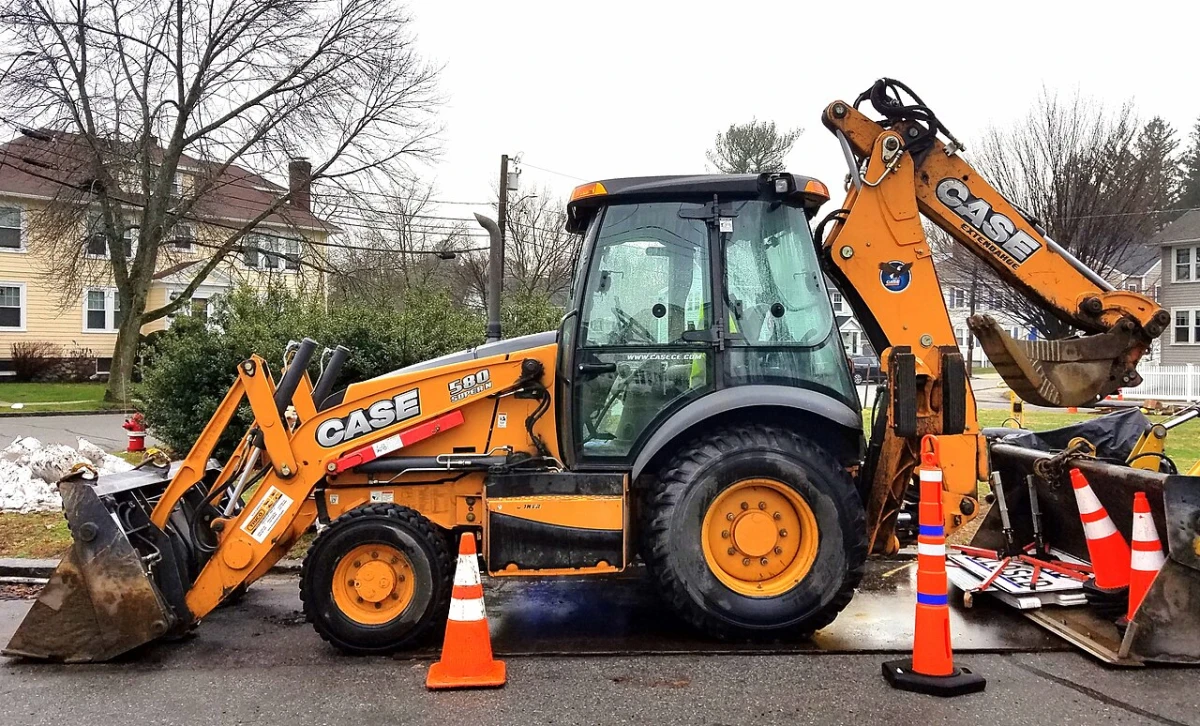

That extra reach adds a wear spot. The inner stick rides on wear pads inside the outer one.
- Run it all the way out. Extend it fully and pull back. It should move smoothly with no jerks.
- Check for play. With it out, push the bucket side to side. Rattle between the inner and outer stick means worn pads.
- Look inside. Shine a light in the end of the outer stick. Look for deep scoring and oil from the extend cylinder.
- Load it. Dig with it extended. It should hold its length and not creep in.
A worn extendahoe still digs. It just digs sloppy, and that slop grows. Price the pads and the labor in before you bid.
Spot 4. Every Pin, Front and Back
A backhoe has pins at the loader arms, the loader bucket, the boom, the dipper and the hoe bucket. Worn pins don't stop the machine. They make it slow, loose and hard to dig a clean trench.
- Load and watch. Have someone curl each bucket against the ground while you watch every joint. Count the joints that move before the steel does.
- Look at the holes. Egg-shaped holes, pins welded in place and missing grease fittings all mean trouble.
- Check the boom to dipper pin. Deere lists a check of the boom to dipperstick pin bolt every 500 hours. Make sure that bolt is there and tight.
A few loose pins are normal wear. Line boring and new bushings at every joint is a big shop bill. Know which one you're looking at.
Spot 5. The Shuttle and the Brakes
A backhoe spends its day going forward, then back, then forward again. Most use a shuttle to switch direction without a clutch. That shuttle is a wear item.
- Test it warm. Let the machine reach full temperature first. Many tired shuttles act fine cold.
- Shift back and forth. Switch from forward to reverse at idle. It should engage within a second or so. A long pause or a hard clunk points to worn clutch packs or low pressure.
- Climb with a load. Fill the loader bucket and drive up a grade. Engine revs climbing while speed stays flat means slipping.
- Check the brakes. Stop on a slope with the service brakes. Then set the parking brake and see if it holds.
Pull the transmission dipstick too. On the 310 G, Deere sets transmission oil changes at every 1,000 hours. Burnt oil smell or dark oil says the change was skipped.
Spot 6. The Front Axle
The loader end puts its weight on the front axle. Pushing into dirt piles all day wears the axle pivot, the steering joints and, on four wheel drive, the drive joints.
The survey shows how much the job matters here. In severe work, average axle life dropped about 19 percent, or 1,900 hours. Tire wear life fell about 19 percent, or 630 hours. Tires in severe work punctured before 1,000 hours on average. So ask what the machine did all day.
- Lift and rock. Use the loader bucket to raise the front tires off the ground. Grab each tire at the top and bottom and rock it. Play means worn steering pivots or wheel bearings.
- Turn lock to lock. Listen for clicks and pops from the axle ends.
- Test four wheel drive. Engage it and push into a pile. All four tires should pull.
Deere lists the front axle pivot pin, steering pivots and four wheel drive joints as daily grease points. A machine with dry joints up front has usually been run hard and greased rarely.
Spot 7. The Hydraulics Under Load
Every function on a backhoe is hydraulic. Weak pumps and leaking cylinders hide when the machine sits still.
- Time the cycles. Raise the loader to full height. Curl and dump. Swing the hoe side to side. Do it cold, then hot. A machine that slows a lot when hot has a tired pump or worn seals.
- Do the drift test. Raise a full loader bucket, shut the engine off and watch it for a few minutes. Do the same with the hoe boom held out. Steady sinking means a cylinder or valve is leaking inside.
- Check the hoses. Look for weeping fittings, rubbed through hoses and fresh hoses next to old ones. One new hose may hide a bigger leak.
Check the auxiliary hydraulics if you plan to run attachments. Case says thumbs, augers and swivel buckets want flow both ways. Breakers and compactors want flow one way. It also warns that sending two-way flow to a one-way attachment can damage it. Match the machine to the tools you own.
Deere sets hydraulic oil changes at every 2,000 hours on the 310 G, with a lab sample every 500. Ask for those reports. If there are none, pull a sample yourself before you buy.
Spot 8. The Engine Label
This check costs nothing and can save the whole deal. If the backhoe will ever work in California, the engine tier decides if you can use it.
CARB's off-road rule covers self-propelled off-road diesels of 25 horsepower or more used in the state. That includes most backhoes. Since January 1, 2024, no fleet may add a Tier 3 engine. Large and medium fleets may add only Tier 4 Final or cleaner (CARB, In-Use Off-Road Diesel-Fueled Fleets Regulation Overview, January 2024).
There are exits. Machines for personal use, machines used only for farming and machines waiting for sale are exempt. A low-use machine, under 200 hours a year on a meter that can't be reset, must still be reported and labeled. It's exempt from the main performance rules.
The seller has a job too. CARB says anyone selling a covered vehicle must put a set disclosure on the bill of sale. The seller must also report the sale to CARB within 30 days.
So read the label on the engine, not the listing. Write down the engine family, the model year and the tier. Then ask one thing. Can my fleet add this engine this year?
The Eight Spots on One Page
Save this to your phone before you go. Any line that ends in walk away is worth taking seriously.
| Spot | What to do | Walk away or price it in if |
|---|---|---|
| Hours and records | Match service counts to the meter | Past 8,500 hours with no engine work on file |
| 1. Swing frame | Swing gently with the bucket down | Cracked welds or big play at the pins |
| 2. Stabilizers | Lift the rear, engine off, wait five minutes | The machine settles or a leg is bent |
| 3. Extendahoe | Extend, rattle and dig with it out | Loud rattle, deep scoring or creep |
| 4. Pins | Load each bucket and watch every joint | Egg-shaped holes or welded pins |
| 5. Shuttle and brakes | Shift warm, climb loaded, stop on a slope | Long delay, slipping or a weak parking brake |
| 6. Front axle | Lift the front and rock each tire | Play at the wheels or clicks turning |
| 7. Hydraulics | Time cycles cold and hot, then drift test | Big slowdown when hot or steady drift |
| 8. Engine label | Write down the tier and model year | You need it in California and can't add it |
Read These Too
Inspecting a common model? Start with its guide.
- Case 580 backhoe loader inspection guide
- John Deere 310 backhoe loader inspection guide
- 9 checks to run before buying used heavy equipment
- How many hours is a lot for a tractor
Want a second set of eyes? Our heavy equipment inspection covers all eight spots on site, with fluid samples sent for lab analysis and the hour meter checked against wear. We work for the buyer, never the seller.
Where the Facts Live
| What we cited | Where it came from |
|---|---|
| Contractors Report Real Backhoe and ADT Life, Larry Stewart, September 28, 2010 | Construction Equipment magazine, accessed October 2026 |
| 310 G Backhoe Loader Replacement Parts Guide and service intervals, March 2023 | John Deere, accessed October 2026 |
| Important Tips for Buying a Backhoe Loader, February 9, 2015 | CNH Industrial newsroom for Case Construction Equipment, accessed October 2026 |
| In-Use Off-Road Diesel-Fueled Fleets Regulation Overview, revised January 2024 | California Air Resources Board, accessed October 2026 |
FAQ
- What are high hours on a backhoe?
- Past about 6,000 hours, some engines need major work. In a Construction Equipment contractor survey, 1 in 5 backhoe engines needed major repair before 6,000 hours and half had failed by 8,500. A machine with full service records can still be a good buy past those marks.
- How long does a backhoe last?
- The same survey found backhoes stayed in main production work about 9,180 hours in moderate use and about 6,800 hours in severe use. Many keep working after that in lighter jobs.
- Is a backhoe heavy equipment?
- Yes. A backhoe loader is a diesel machine with a loader on the front and a digger on the back. In California it falls under CARB's off-road diesel rule when it has 25 horsepower or more.
- How do you tell what year a backhoe is?
- Find the serial number plate on the frame and the emission label on the engine. A dealer for that brand can decode the serial. The engine label shows the engine family and model year, which also tells you the tier.
- Should I buy a backhoe with an extendahoe?
- Buy one if you need the extra reach or set depths. Case says it keeps the machine farther from the trench edge. Just check the wear pads, since a worn extendahoe gets sloppy.
Buying something used? We work for the buyer, never the seller, and hand you a photo report with a plain verdict.
Pick your equipment type and request an inspection